Martha Cheung Award
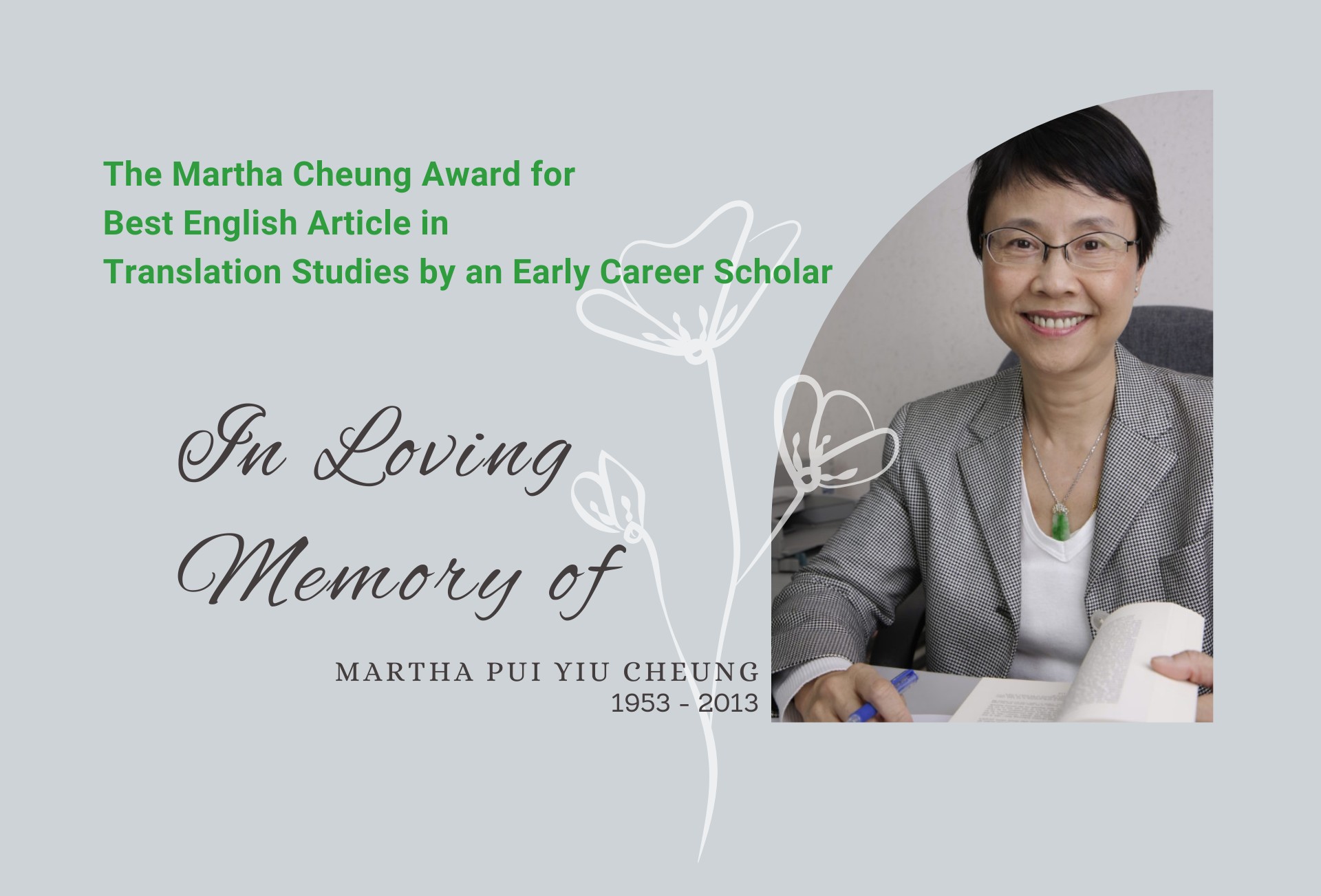
The Centre for Translation is delighted to announce the launch of The Martha Cheung Award for Best English Article in Translation Studies by an Early Career Scholar at Hong Kong Baptist University, the home institution where Professor Martha Cheung served from 1995 to 2013.


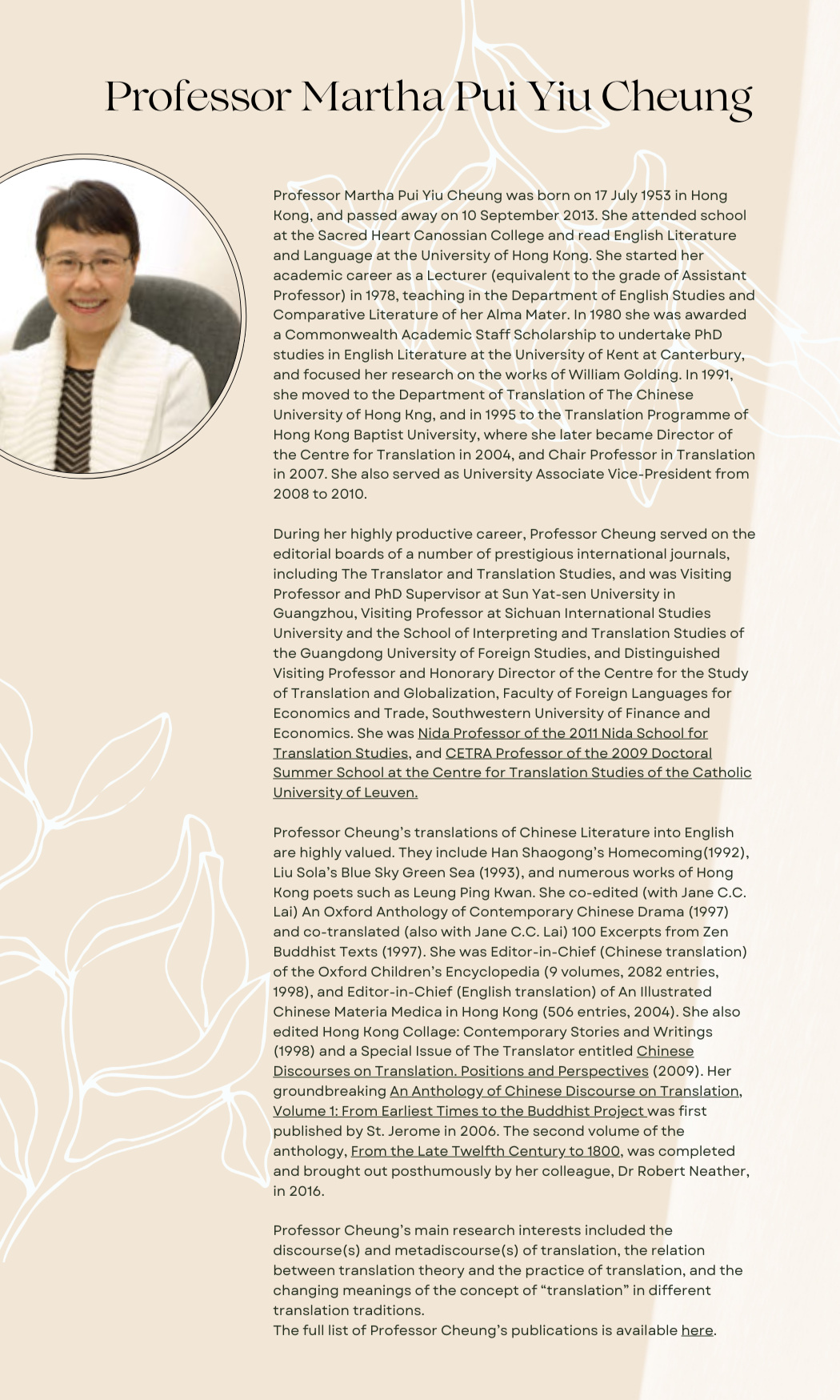
The Martha Cheung Award, initiated by Professor Hu Kaibao and Professor Mona Baker, was initially located at Shanghai Jiao Tong University, and was subsequently run by the Baker Centre for Translation and Intercultural Studies, Shanghai International Studies University. It is established in honour of the late Professor Martha Pui Yiu Cheung (1953-2013), formerly Chair Professor of Translation and Director of the Centre for Translation at Hong Kong Baptist University. Professor Cheung was an internationally renowned scholar whose work on Chinese discourse on translation made a seminal contribution to the reconceptualization of translation from non-Western perspectives. For a brief biography and a list of her most important publications, see Professor Martha Pui Yiu Cheung’s Publications.
The Martha Cheung Award aims to recognize research excellence in the output of early career researchers, and to allow them, like Professor Cheung herself, to make their voices heard in the international arena and play a role in charting the future directions of research in the discipline. The restriction of the award to articles published in English is also intended to ensure consistency in the assessment process.
The Award
The award is conferred annually for the best paper published in English in the previous two-year period, and takes the form of a cash prize of HKD10,000. A certificate from the Centre for Translation of Hong Kong Baptist University will also be presented.

Eligibility
- Applicants must have completed their PhD during the five-year period preceding the deadline for submission of applications, or be currently registered for a PhD.
- Given the emphasis on early career scholars, the award is restricted to single-authored articles: co-authored articles will not be considered.
- The scholarly article submitted must be already published. Work accepted for publication but in press will not be considered.
- The term ‘published’ also covers online publication.
- The article must have been published in English, in a peer-reviewed journal of good standing. Book chapters and entries in reference works do not qualify.
- The article does not have to have appeared in a journal of translation or interpreting. Journals of media, linguistics, postcolonial studies, cultural studies, etc. all qualify, as long as the article engages with translation/interpreting in a sustained manner.
- Submissions will be assessed solely on their scholarly merit, as judged by a panel of established scholars; considerations such as formal journal ranking and impact factor will not form part of the judging criteria.
- The article may present research relating to any area of translation, interpreting or intercultural studies, and may draw on any theoretical models or methodologies.
- Applicants can only submit an article once. Resubmission of articles already assessed in an earlier round will not be admitted.
- Applicants should only submit one article in each round.

Submission
Applicants may apply directly themselves for the award, or their work may be nominated by other scholars. The application, together with a full copy of the article in pdf should be submitted via the online system. Application made by email will not be considered.

Timeframe
For the submission of articles published between 1 November 2024 and 31 October 2026
Application closing date for the 2027 Award: 31 October 2026
Announcement of award winner: 31 March 2027
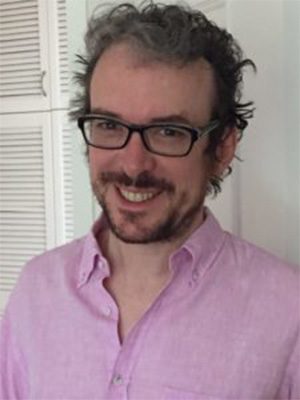
Dr Robert Neather (Chair)
Associate Professor, Department of Translation, Interpreting and Intercultural Studies, Hong Kong Baptist University
Expertise: Museum translation, Buddhist translation, Classical Chinese literature, Collaborative translation, Journal editorship
Robert Neather is Associate Professor at Hong Kong Baptist University, where he is currently also Head of Translation. He gained his PhD from the University of Cambridge with a thesis focusing on fu poetry in the Tang Dynasty. Prior to joining HKBU, he taught translation at the University of Bath and City University of Hong Kong. His research has focused mainly on translation in the Chinese museum context, and has explored several areas of interest including verbal/visual interactions in translation, intertextuality in the construction of museum narratives in translation, and issues of expertise and identity in the production of translations involving a number of different participants from different professional communities. He has published in various journals, including Meta, Semiotica, and The Translator. For many years, he was Executive Editor and then Co-Chief Editor of the Hong Kong-based journal Translation Quarterly.
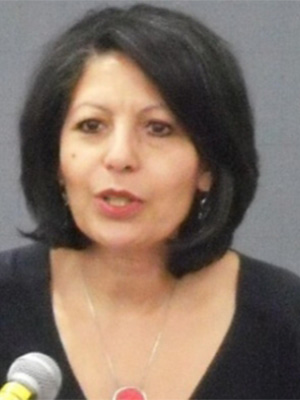
Professor Mona Baker (Vice-chair)
Affiliate Professor, SUSTAINIT, University of Oslo
Expertise: Narrative theory; Corpus-based Conceptual Analysis; Translation, Conflict and Activism
Mona Baker is Affiliate Professor at the Sustainable Health Unit (SUSTAINIT), University of Oslo, where she is responsible for developing the Sustainability & Health Corpus, co-coordinator of the Genealogies of Knowledge Research Network, and Honorary Dean of the Graduate School of Translation & Interpreting at Beijing Foreign Studies University. She is author of In Other Words: A Coursebook on Translation and Translation and Conflict: A Narrative Account; co-author (with Eivind Engebretsen) of Rethinking Evidence in the Time of Pandemics; editor of Translating Dissent: Voices from and with the Egyptian Revolution (winner of the 2016 Intranews Linguist of the Year Award) and Unsettling Translation: Studies in Honour of Theo Hermans; and co-editor of the Routledge Encyclopedia of Translation Studies and the Routledge Encyclopedia of Citizen Media. She is also founding co-editor of the new Diamond Open Access journal Encounters in Translation. Her articles have appeared in a wide range of international journals, including Humanities and Social Sciences Communications; Medicine, Health Care and Philosophy; Social Movement Studies; Critical Studies on Terrorism; Social Semiotics; Translation Studies and The Translator. She posts on translation, citizen media and Palestine on her personal website and tweets at @MonaBaker11.
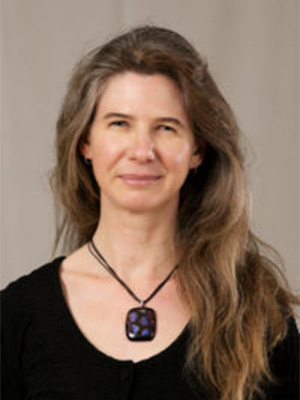
Professor Sue-Ann Harding
Professor in Translation and Intercultural Studies, Queen’s University Belfast, UK
Expertise: Narrative theory, Translation and Conflict, Russian, Journal editorship
Sue-Ann Harding is Professor in Translation and Intercultural Studies at Queen’s University Belfast. Her research interests are eclectic, connected by a common thread of drawing on social narrative theory to investigate translation at sites of narrative conflict, contestation and resistance. She is the author of Beslan: Six Stories of the Siege (Manchester University Press, 2012) and An Archival Journey through the Qatar Peninsula: Elusive and Precarious (Palgrave Macmillan 2022), a subversive reading of archival sources that translates landscape to write a more complicated story of one small place. Her articles and co-authored articles have appeared in leading international journals, including Meta, The Translator, Perspectives, Target, Development in Practice, Translation Studies and The Russian Review. She is co-editor (with Kathryn Batchelor) of Translating Frantz Fanon Across Continents and Languages (Routledge, 2017) and (with Ovidi Carbonell Cortés) of The Routledge Handbook of Translation and Culture (2018). She is President of the International Association of Translation and Intercultural Studies (IATIS), a member of the awards committee for The Martha Cheung Award for Best English Article in Translation Studies by an Early Career Scholar and a founding editor of Encounters in Translation/ Rencontres en Traduction https://publications-prairial.fr/encounters-in-translation/?lang=en She co-writes, co-hosts and co-produces the podcast Solastalgia: Stories of Accidental Environmentalism in Northern Ireland and is presently working on a revised translation and critical edition of The Memoirs of Anna Ey (1839-1917), supported by a British Academy/Leverhulme Small Research Grant and the History Trust of South Australia’s South Australia History Fund.
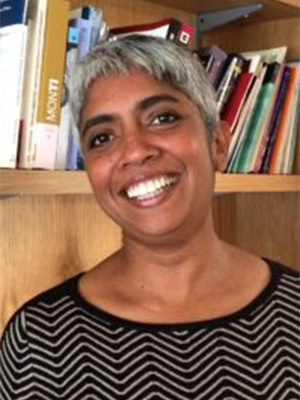
Dr Hephzibah Israel
Lecturer in Translation Studies, University of Edinburgh, UK
Expertise: Translation and religion, translation of sacred texts, South Asia, Tamil, translation and postcolonialism
Hephzibah Israel’s research focuses on literary and sacred translations in the South Asian context. She currently leads an AHRC-funded collaborative research project, under the AHRC Translating Cultures theme, which examines the role of translation in the movement of religious concepts across languages and the ways in which this impacts religious conversion and autobiographical writing about conversion experiences. She has authored several articles and her monograph, entitled Religious Transactions in Colonial South India (2011), studies translations of the Tamil Bible as an object of cultural transfer within intersecting religious, literary and social contexts. She is guest editing a special issue on Religion and Translation for the journal Religion (with Matthias Frenz) and a special issue on Indian traditions of life writing on religious conversion for the journal South Asia (with John Zavos).
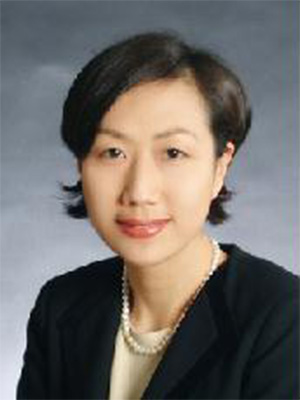
Professor Ji-Hae Kang
Professor of Translation Studies, Ajou University, South Korea
Expertise: Institutional translation; Interpreting and migration; Translation policy; Translation and digital culture; Korean
Ji-Hae Kang is Professor of Translation Studies at the Department of English Language Literature and the Director of the MA and PhD Programs in Translation and Interpreting Studies at Ajou University, Republic of Korea. Her research focuses on translation and interpreting in institutional settings, issues of power, identity and discourse in transnational exchanges, and the interplay between translation and digital culture. She has conducted case studies on translator positioning in institutions, translation/interpreting policies and practices in Korean history, and the role of translation in the circulation and reception of academic knowledge. Other interests include translation-related activities in transnational fandom and social, political, and ethical consequences of the development of digital technology with respect to translation. She is the author of Thongyekuy Ihay [Understanding Interpreting] (2004) and guest-editor of the special issue on Translation in Institutions for the journal Perspectives (2014). Her articles have appeared in a wide range of leading translation studies journals, including Target, The Translator, Meta, Perspectives and The Korean Association of Translation Studies (KATS) Journal. Previously the editor of The KATS Journal, she is currently on the editorial board of Perspectives.
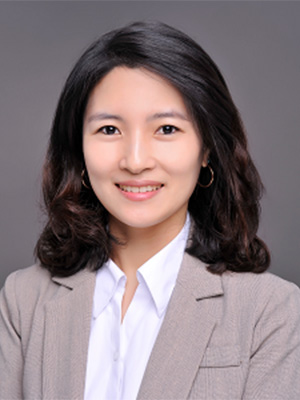
Dr. Kyung Hye Kim
Assistant Professor, Department of English Linguistics, Interpretation and Translation, Dongguk University, South Korea
Expertise: Corpus-based translation studies, critical discourse analysis, news translation, audiovisual translation
Kyung Hye Kim is Assistant Professor at Dongguk University, Seoul, South Korea. She conducts interdisciplinary research on the various ways in which translation impacts and shapes cross-cultural communication and challenges dominant discourses in society, particularly in the areas of news translation and audiovisual translation. She is author of Critical Discourse Analysis in Translation Studies, and co-editor of From Squid Game to Life on Mars: translating and receiving Korean media in the UK and British media in South Korea, Routledge Handbook of East Asian Translation, and Researching Translation in the Age of Technology and Global Conflict. Her articles have appeared in a wide range of international journals, including Discourse and Society, Perspectives, Museum Management and Curatorship, Target, and Pragmatics. She is a member of the Genealogies of Knowledge Research Network, and Chair of the Conference Committee of the International Association for Translation & Intercultural Studies (IATIS), and Chair of the International Cooperation Committee of the Korean Association for Translation Studies. She is also the co-director of Translation Research Summer School and International Research School for Media Translation and Digital Culture at Hong Kong Baptist University.
Terms of Reference
- To oversee the administration of the Martha Cheung Award for Best English Article in Translation Studies by an Early Career Scholar.
- To advise on the formation of a Peer College of academics with suitable expertise to act as judges for the award.
- To produce and disseminate the call for applications for the award.
- To conduct initial screening of applicants’ materials, and to form a long-list of suitable applicants, after the application period has closed.
- To allocate applicants’ materials to members of the Peer College involved in the judging of the award in a given year for their scrutiny and assessment.
- To liaise with the members of the Peer College during the judging process, and to relay the results of the process to the Director of the Centre for Translation, HKBU.
- To announce the winner of the award.
- To report annually to the Director of the Centre for Translation, HKBU, upon completion of that year’s award business, on any issues or matters for consideration arising from the overall award process.
- To advise on publicity initiatives for the award.
Applications received for the Martha Cheung Award are assessed by members of a Peer College drawn from a variety of geographical and disciplinary backgrounds, to provide relevant expertise on as many areas of translation and interpreting studies as possible. The Award Committee may also draw on the expertise of other colleagues in the field as and when necessary.
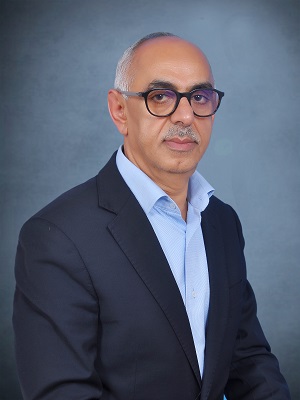
Dr Abdul Gabbar Al-Sharafi
Associate Professor of Translation Studies, Department of English and Translation, Sultan Qaboos University, Oman
Expertise: Translation studies, discourse analysis, rhetoric, and stylistics
Abdul Gabbar Al-Sharafi is an Associate Professor of Translation Studies in the Department of English and Translation at Sultan Qaboos University, where he also serves as the Director of the MA program in Translation Studies. He earned his PhD in Linguistics from Durham University, UK, in 2000, and an MA in Translation Studies from the same institution in 1997. He joined Sultan Qaboos University in 2006.
Al-Sharafi’s research interests include translation studies, discourse analysis, rhetoric, and stylistics. His publications include a book titled Textual Metonymy: A Semiotic Approach, published by Palgrave Macmillan in 2004. He has authored several articles on translation, communication, and discourse, which have appeared in reputable academic journals such as Babel, The Interpreter and Translator Trainer, and Translation Spaces, Informal Logic, among others. He has also published research on discourse analysis, particularly in the areas of risk and crisis communication, including studies on risk communication in Oman during the COVID-19 pandemic.
Al-Sharafi has served as a judge for the prestigious Sultan Qaboos Award for Culture, Arts, and Literature – Translation Division (2016), and for various translation competitions organized by the Literary Forum in Oman (2011, 2013), Petroleum Development Oman Translation Competition (2021), and the Cultural Club Translation Competition (2024). He is a member of the editorial boards of several local and international journals specializing in translation, literature, and the humanities, and serves as a reviewer for a number of academic journals in the fields of translation and discourse analysis.
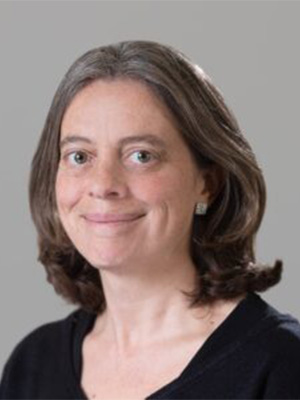
Dr Kathryn Batchelor
Associate Professor of Translation and Francophone Studies, University of Nottingham, UK
Expertise: Translation theory, translation in or involving Africa, literary translation, postcolonial studies
Kathryn Batchelor is Professor of Translation Studies and Director of the Centre for Translation Studies at UCL, UK. She is the author of Translation and Paratexts (2018) and Decolonizing Translation (2009/2014), and has co-edited six volumes of essays, including Intimate Enemies: Translation in Francophone Contexts (2013, with Claire Bisdorff), Translating Frantz Fanon across Continents and Languages (2017, with Sue-Ann Harding), and Translation, Trouvailles (2023, with Chantal Wright). Kathryn’s primary research interests lie in translation theory, postcolonial translation, translation history, and translation philosophy.
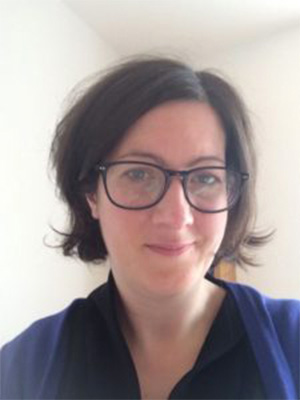
Professor Morven Beaton-Thome
Professor of the Theory and Practice of Interpreting (English), Institute of Translation and Multilingual Communication (ITMK), TH Köln – University of Applied Sciences, Cologne, Germany
Expertise: Conference interpreting, critical discourse analysis, interpreting studies
Morven Beaton-Thome is Professor of the Theory and Practice of Interpreting (English) at the Institute of Translation and Multilingual Communication (ITMK) at TH Köln – University of Applied Sciences, Cologne, Germany. Prior to her appointment in 2013, she held tenured academic positions at the Centre for Translation and Intercultural Studies (CTIS), University of Manchester, UK, and Saarland University, Germany. Her research focuses on (1) interpreter agency and ideological positioning in institutional settings, and the impact of interpreters as gatekeepers of multilingual discourse; (2) negotiation and construction of the Self/Other dichotomy and the positioning of language(s) and interpreters in discourse, particularly in contexts of nationalism and immigration; (3) research in interpreting pedagogy and didactics, specifically related to the development of situated expertise and communities of practice. Methodologically, she is particularly interested in descriptive and ethnographic research as a means of conceptualizing participant and interpreter response to heteroglossic debate. She has published in peer-reviewed journals such as The Translator and Journal of Language and Politics and has contributed to the Routledge Encyclopedia of Interpreting.
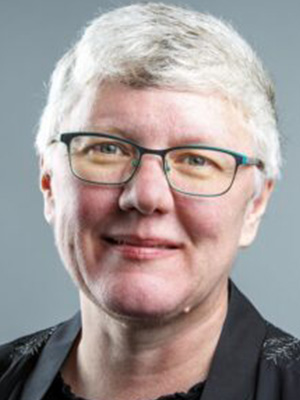
Professor Lynne Bowker
Full Professor and Canada Research Chair, Département de langues, linguistique et traduction, Université Laval, Canada
Expertise: Translation technologies, corpus linguistics, terminology and language for special purposes, lexicography, scientific and technical translation
Lynne Bowker is Full Professor and Canada Research Chair in Translation, Technologies, and Society at Université Laval in Canada. She earned an MA in Translation (University of Ottawa) and a PhD in Language Engineering (University of Manchester Institute of Science and Technology, UK). In 2020, she was elected to the Royal Society of Canada. Her research focuses on various aspects of computer-aided and machine translation, as well as language for special purposes. She is the author of Computer-Aided Translation Technology (University of Ottawa Press, 2002), co-author of Working with Specialized Language: A Practical Guide to Using Corpora (Routledge, 2002), co-author of Machine Translation and Global Research: Towards Improved Machine Translation Literacy in the Scholarly Community (Emerald Publishing 2019), and author of De-mystifying Translation: Introducing Translation to Non-translators (Routledge, 2023). She is a member of the editorial board of several journals, including The Interpreter and Translator Trainer, the International Journal of Lexicography, and the Annual Review of Information Science and Technology.
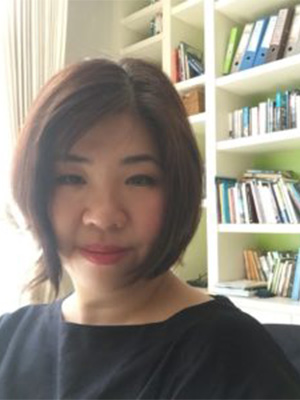
Dr Phrae Chittiphalangsri
Associate Professor of Translation Studies and Comparative Literature, Chalermprakiat Center of Translation and Interpretation, Faculty of Arts, Chulalongkorn University, Bangkok, Thailand
Expertise: Orientalism, translation and postcolonialism, history of translation, literary translation, Bourdieu’s approach to sociology and translation, Thai and Southeast Asian translation studies
Phrae Chittiphalangsri is Associate Professor at Chalermprakiat Center for Translation and Interpretation (CCTI), Chulalongkorn University, Bangkok, Thailand, and acts as the center’s chairperson for the MA program in translation studies. She was co-editor of New Voices in Translation Studies (2008-2012), and now serves on the journal’s advisory board. In 2021, she became co-vice president of the International Association of Translation and Intercultural Studies (IATIS). Phrae Chittiphalangsri has published articles on the role of translation in Orientalism and Thai translation history in several international journals such as Translation Studies, Asia Pacific Translation and Intercultural Studies and The Translator. Her article on the translation of early Thai prose fiction appears in Translation and Global Asia: Relocation Cultural Production Network (2014). She is also a contributor of entries on Orientalism in the Routledge Encyclopedia of Translation Studies (third edition), and on the Thai translation tradition in A World Atlas of Translation (2019). With Vicente L. Rafael, she co-edited the first monograph on Southeast Asian translation Of Peninsulas and Archipelagos: the landscape of translation in Southeast Asia (2023). She is also a literary translator working with Thai, English and French.
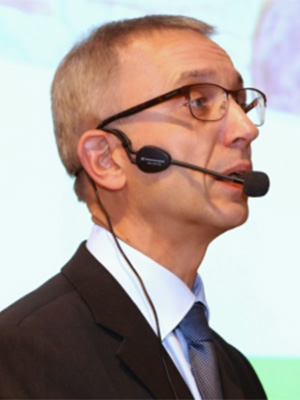
Professor Dirk Delabastita
Professor of English Literature and Literary Theory, University of Namur, and Research Fellow, KU Leuven, Belgium
Expertise: Literary translation, translation and multilingualism, translation theory, journal editorship, English literature, literary theory, humour studies
Dirk Delabastita teaches English literature and literary theory at the University of Namur and is a research fellow at KU Leuven. His publications engage with fields such as literary translation studies, wordplay studies and the international reception of Shakespeare’s works. He is now increasingly focusing his research on literary multilingualism, with papers on ’Allo ’Allo, Bram Stoker, Charlotte Brontë, Joyce Carol Oates and Xiaolu Guo. Dirk has co-authored three dictionaries of literary terms, including Dictionnaire des termes littéraires (2005) in French and the open-access project Algemeen Letterkundig Lexicon in Dutch. His books include There’s a Double Tongue. An Investigation into the Translation of Shakespeare’s Wordplay, with special reference to ‘Hamlet’ (1993), European Shakespeares (co-edited with Lieven D’hulst, 1993), Fictionalizing Translation and Multilingualism (co-edited with Rainier Grutman, 2005), Shakespeare and European Politics (co-edited with Jozef de Vos and Paul Franssen, 2008), Multilingualism in the Drama of Shakespeare and His Contemporaries (co-edited with Ton Hoenselaars, 2015), and “Romeo and Juliet” in European Culture (co-edited with Juan F. Cerdá and Keith Gregor, 2017). From 2012 to 2019 Dirk co-edited Target. International Journal of Translation Studies.
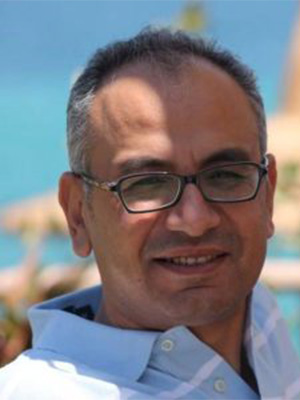
Dr Sameh Hanna
Associate Professor in Arabic Literature and Translation, University of Leeds, UK
Expertise: Bible translation; history of translation (with particular reference to the Arab World); Bourdieusean applications; literary translation
Sameh Hanna is currently a Global Translation Advisor and Translation Studies Researcher with United Bible Societies. After earning his PhD from University of Manchester, UK, he got an Andrew Mellon postdoctoral fellowship in the Humanities at University College London, followed by two lectureships at the Universities of Salford and Leeds. At Leeds he worked as an associate professor in Arabic Literature and Translation Studies and served as the director of Arabic, Islamic and Middle Eastern Studies before joining UBS. His main research is within the area of sociology of translation, with focus on the socio-cultural dynamics of the translation and reception of canonical texts (including Shakespeare’s work and the Bible) in Arab-Islamic settings on which he published several peer-reviewed articles. His book, Bourdieu in Translation Studies: The Sociocultural Dynamics of Shakespeare Translation in Egypt (2016), published by Routledge, offers a full-length investigation of the implications of Bourdieu’s sociology of cultural production for the study of Drama translation. He is also the co-editor of the Routledge Handbook of Arabic Translation(2019). Dr Hanna is a founding member of the International Association of Translation and Intercultural Studies and served as an associate editor of the peer review journal Target and is currently on the editorial boards of the two peer-reviewed journals, Target and Translation in Society.
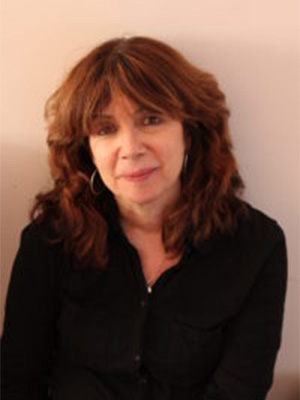
Professor Moira Inghilleri
Associate Professor and Director of Translation and Interpreting Studies, University of Massachusetts, Amherst, USA
Expertise: Translation and migration, translation ethics, interpreting in war zones, the sociology of translation and interpreting
Moira Inghilleri is the author of Translation and Migration (Routledge 2017) and Interpreting Justice: Ethics, Politics and Language (Routledge 2012). She guest-edited two special issues of The Translator: Bourdieu and the Sociology of Translation and Interpreting (2005) and Translation and Violent Conflict (2010, co-edited with Sue-Ann Harding). Her research has appeared in Translation Studies, The Translator, Target, Language and Communication, Linguistica Antverpiensia and numerous edited collections, including the Routledge Handbook on Translation and Culture (2018), Routledge Handbook on Translation and Politics (2018) and Handbook on Languages at War (Palgrave MacMillan 2018). Between 2002-2007, while at Goldsmiths, University of London, she held a series of research grants funded by the UK’s Economic and Social Research Council (ESRC) to investigate the role of interpreters in political asylum cases in the UK. From 2008 to 2011, based at University College London, she was awarded an ESRC Career Fellowship to investigate the topic of the social, political and ethical role of the translator and translation in conflict zones. She served as review editor (2006-2011) and co-editor (2011-2014) of The Translator and is currently series co-editor for the Routledge book series, New Perspectives in Translation and Interpreting Studies.
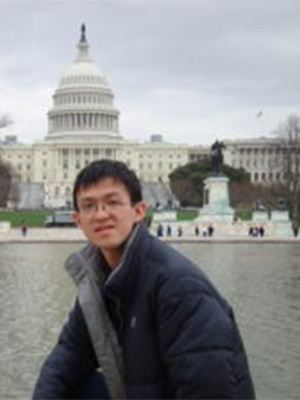
Dr Chengzhi Jiang
Associate Professor, Department of Translation and Interpreting, Wuhan University, China
Expertise: Translation in the museum, semiotics, pragmatics, poetry translation, linguistics, traditional Chinese art critical concepts
Chengzhi Jiang received his doctorate from City University of Hong Kong and is now an associate professor in the Department of Translation and Interpreting, Wuhan University. His research interests lie in intersemiotic translation, poetry translation and translation in the Chinese museum and heritage context. His publications include ‘Conceptualizing Pushing-hands in Translation Studies: From a Heideggerian Perspective’ (in Pushing-Hands of Translation and Its Theory: In Memoriam Martha Cheung, 1953-2013, 2016), ‘Visual Pragmatic Effects of Distance Representation in Bilingual Museum Catalogue Entries of Chinese Landscape Paintings’ (Journal of Pragmatics 2012), ‘Rethinking the Translator’s Voice’ (Neohelicon 2012), ‘Quality Assessment for the Translation of Museum Texts: Application of a Systemic Functional Model’ (Perspectives 2010).

Professor Jan-Louis Kruger
Head of Department and Associate Professor, Department of Linguistics, Macquarie University, Sydney, Australia
Expertise: Psycholinguistics, reception, cognition, audiovisual translation (with particular emphasis on assistive modalities), eye-tracking technology
Jan-Louis Kruger is Professor of Translation Studies in the Department of Linguistics at Macquarie University in Sydney, Australia. He is also extraordinary professor in the UPSET Research Focus Area on the Vaal Triangle Campus of North-West University in South Africa. He holds a PhD in English on the translation of narrative point of view. He has been involved in the teaching of and research into audiovisual translation since the late 1990s and has completed projects on subtitler training, subtitling and multilingualism, subtitling in the classroom, subtitle reading and subtitling and immersion. He has also done work on AD, which ties in with his interest in narrative theory. His current research investigates multimodal language integration such as in the reading of subtitles, and the use of same language subtitles in literacy development. He is on the editorial board of the Journal of Audiovisual Translation (JAT)
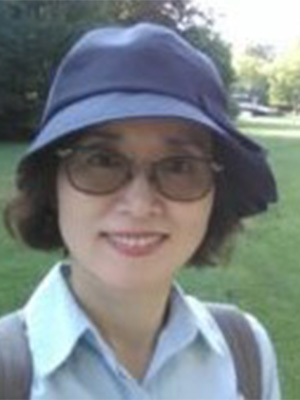
Professor Jieun Lee
Professor, Graduate School of Translation and Interpretation, Ewha Womans University, Seoul, Korea
Expertise: Legal interpreting, community interpreting, translator and interpreter training, intercultural communication
Jieun Lee is Professor at Ewha Womans University Graduate School of Translation and Interpretation, and is currently the vice dean of the graduate school. She received her PhD in Linguistics from Macquarie University in Sydney, and taught there before joining Ewha Womans University in 2010. Her research interests include legal interpreting, community interpreting, interpreter and translator training, and discourse analysis. Her research work has been published in peer-reviewed journals such as Interpreting, Translation and Interpreting Studies, Applied Linguistics, Multilingua, Perspectives, Meta, International Journal of Speech, Language and the Law, and Police Practice and Research.

Dr Maialen Marin-Lacarta
Associate Professor, Department of Translation, Interpreting and East Asian Studies, Autonomous University of Barcelona, Spain
Expertise: Literary translation, modern and contemporary Chinese literature, literary reception, indirect translation, digital publishing, research methodologies.
Maialen Marin-Lacarta is Researcher in the Department of Arts and Humanities at the Universitat Oberta de Catalunya (Barcelona). Prior to joining UOC, she was Assistant Professor in the Department of Translation, Interpreting and Intercultural Studies at Hong Kong Baptist University, teaching courses on translation, Chinese literature, intercultural studies, digital publishing and the global circulation of literatures, and supervising Honours Projects, MA students and PhD students. In 2019, Marin-Lacarta received the President’s Award for Outstanding Performance as Young Researcher at HKBU. She is also the awardee of the Jokin Zaitegi Basque National Award for her translation of Nobel Prize winner Mo Yan’s work into Basque, and the recipient of two General Research Fund grants by the University Grants Committee of Hong Kong (as Principal Investigator) and two Spanish government-funded grants (as Co-Investigator). Marin-Lacarta is interested in the complex position of Chinese and Sinophone literatures in the global literary system. Her research has focused on translation history, indirect translation and, more recently, on ethnographic approaches to study ebook publishing. Her articles have appeared in journals such as Translation Studies, The Translator, Meta, and Perspectives. She is also the author of the entry on research methodologies in the Routledge Encyclopedia of Translation Studies (2019, Mona Baker and Gabriela Saldanha eds.). She has been academic referee for Target, Translation Studies and Meta, among other journals, and is the co-editor of 1611: A Journal of Translation History.

Professor Outi Paloposki
Professor of English, School of Languages and Translation Studies, University of Turku, Finland
Expertise: Translation history, retranslation, methodology of historical translation studies, archival studies
Outi Paloposki is Professor of English (Translation Studies) at the University of Turku. She was one of the editors of the two-volume History of Literary Translation into Finnish (Suomennoskirjallisuuden historia I–II), published by the Finnish Literature Society in 2007, and of its companion volume, History of Non-fiction Translation into Finnish (Suomennetun tietokirjallisuuden historia, 2013). Methodology in translation studies, especially historical studies, is one of her teaching priorities. Outi Paloposki has given a number of keynote lectures in national and international conferences and published widely in several translation studies journals. She is member of the board of the Doctoral and Teacher-Training Translation Studies Summer School (DOTTSS) and of the international History and Translation Network. She regularly serves as referee for national and international publications.
Website and full bibliography: https://research.utu.fi/converis/portal/Person/1202275?auxfun=&lang=en_GB

Dr Susan Pickford
Assistant Professor of Translation Studies, University of Geneva, Switzerland
Expertise: Translating travel writing, translation and book history, translator sociology and history
Susan Pickford is Assistant Professor of Translation Studies and head of the English unit at the Faculty of Translation and Interpreting, University of Geneva. Her publications include Travel Narratives in Translation, 1750-1830: Nationalism, Ideology, Gender (Routledge 2012) and a special issue of the journal InTRALinea on translating travel writing, both co-edited with Alison E. Martin. She has written numerous articles on translation history and sociology and contributed to several major translation studies reference works, including two volumes of the Histoire des traductions en langue française, the Routledge Encyclopedia of Translation Studies, the History of Translation Knowledge, the Routledge Handbook of Translation History, and the Routledge Handbook of the Translation Industry. Her monograph Professional Translators in Nineteenth-Century France is forthcoming in 2024, alongside an edited volume of essays on science translation in the long nineteenth century. She is also a practicing translator in the arts and humanities and was elected to the board of the French literary translators’ association for ten years.
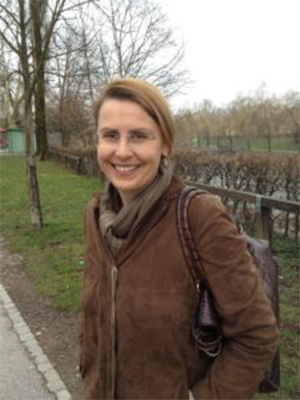
Professor Nike K. Pokorn
Professor in Translation Studies, Department of Translation, University of Ljubljana, Slovenia
Expertise: Directionality and pedagogical issues, historical research, post-socialist translation practices, translation theories and philosophies, public service interpreting
Nike K. Pokorn is Professor in Translation Studies at the Department of Translation, University of Ljubljana, Slovenia, where she currently serves as the Director of Doctoral Studies in TS. Her research interests include translation and censorship, directionality in translation and public-service interpreting and translation. She was a member of the 8-member European Master’s in Translation (EMT) Expert Group appointed by the Directorate General for Translation at the European Commission that was responsible for setting up the EMT network and creating the EMT competences document. She won the European Society for Translation Studies Award for her doctoral thesis, and served two terms on the board of EST – European Society for Translation Studies, and two terms on the board of EMT – European Master’s in Translation Network. In 2017 she was elected director of the board of the Network of International Doctorate in Translation Studies ID-TS. She has published articles in different TS journals such as Target, The Translator, The Interpreter and Translator Trainer, Translation and Interpreting Studies, Across Languages and Cultures and Perspectives, and is the author of Challenging the Traditional Axioms: Translation into a Non-Mother Tongue (John Benjamins 2005) and Post-Socialist Translation Practices (John Benjamins 2012). She is also co-editor of Why Translation Studies Matters, with Daniel Gile and Gyde Hansen (John Benjamins 2010).
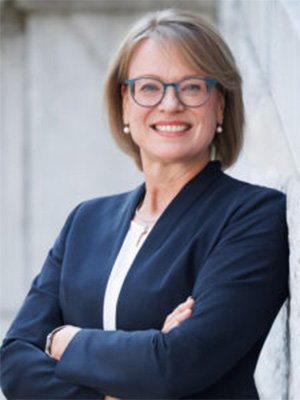
Professor Hanna Risku
Professor of Translation Studies, University of Vienna, Austria
Expertise: Socio-cognitive translation studies, embodied cognition, organizational learning, workplace ethnography
Hanna Risku is Professor of Translation Studies and head of the Research Group Socio-Cognitive Translation Studies (socotrans) at the University of Vienna in Austria. Prior to her work in Vienna, she was Professor of Translation Studies at the University of Graz, and Professor of Applied Cognitive Science and Technical Communication, Vice Rector and Head of Department at the Danube University Krems in Austria. In the course of her career, she has also lectured at various universities in Finland, Sweden, Denmark and Spain. In 2023, she was CETRA Chair professor at KU Leuven and DOTTSS Guest professor at Tampere University. She is a member of the Finnish Academy of Science and Letters. Her main areas of interest are translation and situated cognition, translation and network analysis, ethnographic studies in translation workplaces, usability and information design.
Dr Gabriela Saldanha
Research Associate, University of Oslo, Norway
Expertise: Research methodologies, translation stylistics, artistic features of translation, reception of translation, gender identity and translation, corpus-based studies
Dr Gabriela Saldanha is a researcher at the Centre for Sustainable Healthcare Education (SHE) where she works on the development of the Oslo Medical Corpus and the Medicalisation of Democratic Rights in the debate about Abortion (MEDRA) project. She is Project Manager for the Erasmus+ Partnership for Cooperation in Higher Education, Debating Democracy. Gabriela’s research aims to explain how language shapes our knowledge of the world and how it can both restrict, challenge, and expand the work of the imagination as a social process. She has experience in corpus linguistics, discourse analysis and artistic research and have a particular interest in the power of research methodologies to reveal, construct and limit our knowledge(s) and imagination.
Dr Rafael Y. Schögler
Associate Professor in Translation Studies, University of Graz, Austria
Expertise: Cultural and sociological approaches to translation, knowledge translation, translation policy, translation history
Rafael Schögler is Associate Professor of Translation Studies at the University of Graz, Austria. He studied translation studies (habilitation) and sociology (doctorate) and has spent time as a visiting researcher at both CenTras, London and CTIS, Manchester. His research deals with divergent aspects of knowledge translation ranging from questions of internationalization to the politics of book translation. In this context he published the edited volume Circulation of Academic Thought. Rethinking Translation in the Academic Field (2019) as well as the open access monograph Die Politik der Buchübersetzung. Entwicklungslinien in den Geistes- und Sozialwissenschaften nach 1945 (2023). Currently, he is also involved in the project Towards a Cosmovision Turn. Challenging Basic Translation Theories that deals with translation in indigenous communities and its links to the development of translation theories in the context of missionary work. Rafael Schögler is associate editor of the John Benjamins journal Translation in Society, author of several contributions in English, French and German as well as part of a research team working on the connections of history, translation and politics at the University of Graz. He is member of EST and IATIS.
Professor Tarek Shamma
Professor in Translation Studies and Comparative Literature, Binghamton University, New York, USA
Expertise: History of translation, literary translation, comparative literature
Tarek Shamma is professor at the Translation Research and Instruction Program and Comparative Literature Department and the Director of the Translation Research and Instruction Program (Binghamton University, New York, USA). He has taught at universities in Syria, United Arab Emirates, and Qatar. His research interests include translation and culture, history of translation, Arabic literature, and cultural representation. He is the author of Translation and the Manipulation of Difference: Arabic Literature in Nineteenth-Century England (St. Jerome/Routledge, 2009) and Anthology of Arabic Discourse on Translation (Routledge, 2022; also published in Arabic by Arab Center for Research and Policy Studies, Qatar).
Professor Şehnaz Tahir Gürçağlar
Professor of Translation Studies, Department of Translation and Interpreting Studies, Boğaziçi University, Istanbul, Turkey; Course Director of MA program in Translation Studies, Glendon College, York University, Toronto, Canada
Expertise: Translation history and historiography, translation sociology, retranslation, periodical studies
Şehnaz Tahir Gürçağlar is retired Professor of Translation Studies at the Department of Translation and Interpreting Studies at Boğaziçi University and course director at the MA program in Translation Studies in Glendon College at York University. She holds a PhD in Translation Studies (Boğaziçi University) and an MA in Media Studies (Oslo University). She is the author of The Politics and Poetics of Translation in Turkey, 1923-1960 (Rodopi 2008, Turkish translation 2017) and two books on translation studies published in Turkish (Kapılar 2005, Çevirinin ABCsi 2011). She is the co-editor of Tradition, Tension and Translation in Turkey, John Benjamins, 2015; Perspectives on Retranslation: Ideology, Paratexts, Methods, Routledge 2019; Studies from a Retranslation Culture: The Turkish Context, Springer 2019; Negotiating Linguistic Plurality, Translation and Multilingualism and Beyond, McGill-Queen’s University Press, 2022. Her current research examines translation and/in the periodical press. Tahir Gürçağlar is a member of the steering committee of the Translation Studies Doctoral and Teacher Training Summer School (DOTTSS) and an ARTIS Associate.
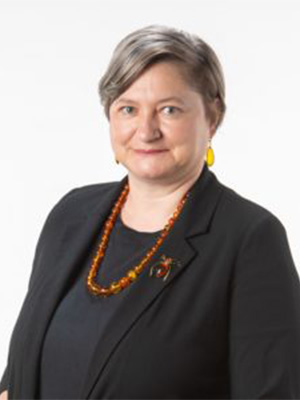
Dr Marija Todorova
Assistant Professor, Department of Linguistics and Modern Language Studies, The Education University of Hong Kong, Hong Kong SAR
Expertise: Interpreting and translating for refugees, translation and development, imagology and translation, multimedia translation, literature for children and young adults
Marija Todorova is the editor of Interpreter Training in Conflict and Post Conflict Scenarios (Routledge 2023, with Lucia Ruiz Rosendo) and Interpreting Conflict: A Comparative Framework (Palgrave 2021, with Lucia Ruiz Rosendo). She is the guest-editor of a special issue of Linguistica Antverpiensia: Translation and Inclusive Development (2022, with Kobus Marais). Her research has appeared in The Translator, Translation and Interpreting Studies, Linguistica Antverpiensia, Translation Spaces, and numerous edited collections, including the Oxford Handbook of Translation and Social Practice (2021). She serves as editor of New Voices in Translation Studies and sits on the Editorial Board of Hieronimus journal at University of Zagreb. She holds a PhD in English Language and Literature (HKBU, Hong Kong) and a PhD in Peace and Development Studies (UKIM, Skopje). She is an award-winning literary translator of more than 30 books from English into Macedonian. Prior to joining academia, she worked as interpreter for OSCE and UNHCR, as well as project manager for UNDP and DfID. She is Executive Council member of the International Association of Translation and Intercultural Studies (IATIS, 2011 – present) and Chair of the IATIS Social Media and Outreach Committee (2020 – present).
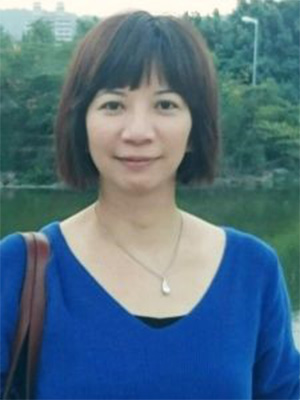
Dr Claire Tsai
Associate Professor, Department of English, National Taipei University of Technology, Taiwan
Expertise: Television news translation and interpreting
Claire Tsai is Associate Professor in the Department of English at the National Taipei University of Technology, Taiwan. She received her MA in Translation and Interpretation at the Middlebury Institute of International Studies in Monterey in the United States and her PhD in Translation Studies at the University of Warwick in the United Kingdom. She had worked in the print and broadcast media field as a reporter and news translator in Taiwan and the US for six years before entering academia. Her doctoral research concerned television news translation and how the representation of international news shapes the nature of intercultural communication. She is also winner of the first Snell Fellowship in Translation Studies, supported by Professor Mary Snell-Hornby. She has published articles on translation and journalism in various journals, including Meta, Perspectives and Languages and Intercultural Communication. Her research interests centre on TV news translation, journalism studies, interpreting and subtitling. Selected publications include ‘Reframing Humor in TV News Translation’ (Perspectives 2015), ‘Television News Translation in the Era of Market-driven Journalism’ (Meta 2012) and ‘News Translator as Reporter’ (in Political Discourse, Media and Translation, Cambridge Scholars Publishing 2010).
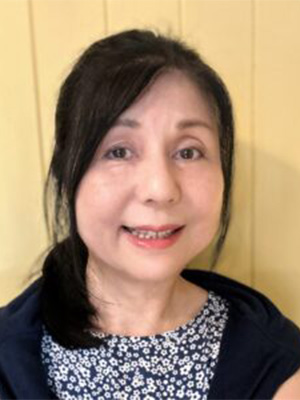
Dr Akiko Uchiyama
Lecturer in Translation Studies, The University of Queensland, Australia
Expertise: Literary translation, gender in translation, postcolonial translation studies, the cultural history of translation in Japan
Akiko Uchiyama is a Lecturer in the School of Languages and Cultures at the University of Queensland, where she coordinates the Master of Arts in Translation and Interpreting (MATI) program. She has research interests in literary translation, modern and contemporary Japanese literature, gender in translation, postcolonial translation studies, and the cultural history of translation in Japan. Her recent publications include ‘Shinseinen no bungaku-teki tenkai: Morishita Uson to ‘tantei shōsetsu’ no hon’yaku’ (Literary Development in Shinseinen: Morishita Uson’s Translation of Detective Novels) in Hon’yaku to bungaku (2021) and ‘The Politics of Translation in Meiji Japan’ in The Routledge Handbook of Translation and Politics (2018). She co-edited the collections Diverse Voices in Translation Studies in East Asia (2019) and Border-Crossing Japanese Literature: Reading Mutiplicity (2023).
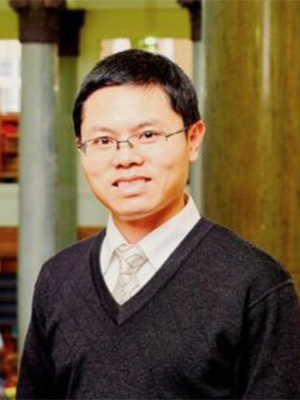
Professor Binhua Wang
Chair/Professor of Interpreting and Translation Studies/Director of MA Conference Interpreting and Translation Studies, University of Leeds, UK
Expertise: Conference interpreting and interpreter training
Prof. Binhua Wang is Chair/Professor of interpreting and translation studies at University of Leeds in the UK, where he served as Director of the Centre for Translation Studies and Programme Manager of the MA programmes in interpreting. He is a Fellow of the “Chartered Institute of Linguists” (CIoL) and sits on the Executive Committee of the UK “University Council of Modern Languages” (UCML) and the Interpreters Committee of the Translators Association of China. His research interests focus on interpreting and translation studies, with interdisciplinary extension to digital humanities, cognitive research process about bilingual processing, language education studies, intercultural communication studies and translated literature studies, in which he has published many research articles in world leading SSCI/A&HCI/CSSCI journals and in edited volumes published by Routledge, John Benjamins, Springer, Bloomsbury, Brill and Palgrave. He has been mentioned by some scientometric studies as one of the most prolific authors in Chinese interpreting and translation studies. His recent articles have appeared in Perspectives, Babel, Digital Scholarship in the Humanities, Translation Review, Translation Spaces, Language and Intercultural Communication, Chinese Translators Journal and in The Routledge Handbook of Conference Interpreting and The Routledge Handbook of Chinese Discourse Analysis. His monographs include New Orientations in Interpreting Studies and Education (Routledge, forthcoming), Theorising Interpreting Studies (2019) and A Descriptive Study of Norms in Interpreting (2013). He has edited with Prof Jeremy Munday Advances in Discourse Analysis of Translation and Interpreting (Routledge) and guest edited themed special issues for some top international journals such as Perspectives, Frontiers in Communication, and Asia-Pacific Translation and Intercultural Studies. He also co-translated Introducing Interpreting Studies into Chinese (Pöchhacker, 2010). His textbooks for interpreter training are used widely in China’s MTI and BTI programmes. He serves as the co-editor of Interpreting and Society. An Interdisciplinary Journal, chief editor of Int’l Journal of Chinese and English Translation & Interpreting and on the editorial boards of Babel. International Journal of Translation (SSCI/A&HCI), The Interpreter and Translator Trainer (SSCI), Forum: International Journal of Interpretation and Translation (ESCI), Chinese Translators Journal (CSSCI), Foreign Language Teaching & Research (CSSCI), Translation Quarterly (journal of The Hong Kong Translation Society), Corpus-based Studies across Humanities (De Gruyter), Translation Today (National Translation Mission, India), etc. He has been invited to deliver keynote speeches to over 20 international conferences and to give guest talks in many universities in China mainland, Hong Kong, Macau, U.S., Canada, U.K. and European continent.
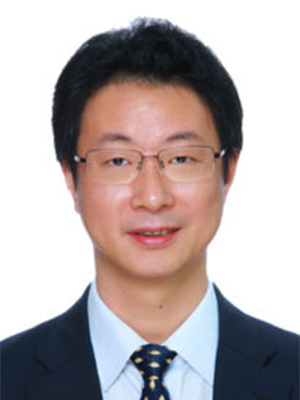
Professor Mingjian Zha
Professor of Comparative Literature and Translation Studies, School of English Studies, Shanghai International Studies University (SISU), China
Expertise: Comparative literature theories, world literature, sino-foreign literary relationship studies, thematology studies, translated Literature studies
Zha Mingjian is Professor of Comparative Literature and Translation Studies at the School of English Studies and Director of the Institute of Comparative Literature, Shanghai International Studies University (SISU), Associate editor-in-chief of Comparative Literature in China, Fulbright senior research scholar (Harvard University, 2006-2007), Vice president of China English Language Education Association, and Vice president of Shanghai International Studies Association. His main research interests are comparative literature, translation studies and humanities education. His main publications include A History of Translated Literature in Modern China (2004), A History of Foreign Literature Translation in 20th Century China (2007) and Professor ZHA Mingjian’s Selected Essays on Comparative Literature and Translation Studies (2014). His main Chinese translations include Comparative Literature: A Critical Introduction (2014) and What Is World Literature (2015). He has also published more than 70 journal articles on comparative literature and translation studies.
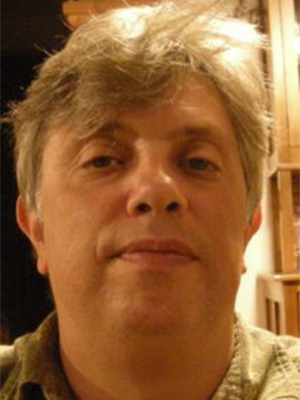
Professor Federico Zanettin
Professor of English Language and Translation, Department of Political Sciences, University of Perugia, Italy
Expertise: Corpus-based translation studies, comics translation, news translation, conversation analysis, Italian
Federico Zanettin is Associate Professor of English Language and Translation at the University of Perugia, Italy. His research interests range from comics in translation, to corpus-based translation studies, news translation and intercultural communication. He is the author of News Media Translation (Cambridge University Press, 2021), Translation-driven Corpora. Corpus Resources for Descriptive and Applied Translation Studies (St. Jerome 2012), editor of The Routledge Handbook of Translation and Methodology (Routledge 2022, with Chris Rundle), New Directions in Corpus-Based Translation Studies (Language Science Press 2015, with Claudio Fantinuoli), Comics in Translation (St Jerome 2008) and Corpora in Translator Education (St. Jerome 2003, with Silvia Bernardini and Dominic Stewart), and has published articles in several journals and edited volumes. He is co-editor of the journal inTRAlinea and serves on the advisory board of The Translator, Translang, Transletters and Entreculturas.

Dr Jitka Zehnalová
Assistant Professor, Department of English and American Studies, Palacký University, Olomouc, Czech Republic
Expertise: Translation quality assessment, critical discourse studies, sociological approaches, intercultural communication
Jitka Zehnalová earned her master’s degree in English and German and her PhD degree in English language from Palacký University in Olomouc, Czech Republic. In 1998, she joined the Department of English and American Studies as an assistant professor, teaching undergraduate and graduate courses in translation studies and stylistics. Over the course of her career at this Department, she participated in implementing the BA and MA study programmes in English for Interpreting and Translation, served as an organization committee member of the TIFO (Translation and Interpreting Forum Olomouc) international conference, and as a co-editor of the Olomouc Modern Language Series publications. She has published in the fields of translation quality assessment and literary translation.
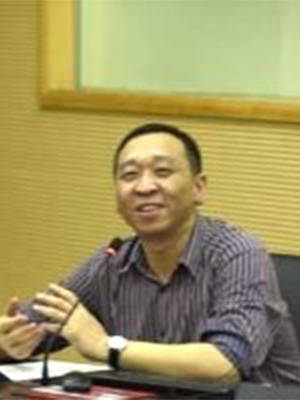
Professor Junfeng Zhang
Professor of Translation Studies, School of Foreign Languages, China University of Geosciences (Wuhan), China
Expertise: Translation of diplomatic and political discourse, pragmatics, teaching translation and translation teaching, metaphor studies
Junfeng Zhang received his PhD in translation studies from the City University of Hong Kong and is Professor of Translation Studies and Dean of the School of Foreign Languages, China University of Geosciences (Wuhan). He was a recipient of the Fulbright Graduate Fellowship (2000) and Endeavour Research Fellowship (2009). He has published a monograph (Interpersonal Prominence and International Presence) with Cambridge Scholars Publishing and two textbooks with Chongqing University Press and China Radio and Television Press. His articles have appeared in the Chinese Translator’s Journal, Perspectives: Studies in Translatology, The Interpreter and Translator Trainer and Meta. He is on the editorial board of Translation and Translanguaging in Multilingual Contexts. His main research interests include translation studies, discourse analysis, and metaphor studies. His research projects received grants from the National Natural Science Foundation of China, Ministry of Education of China, and Fundamental Research Funds for the Central Universities.
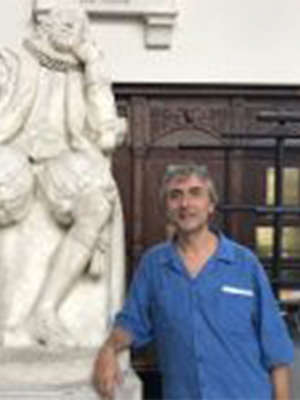
Dr Sabri Gürses
Assistant Professor, Department of Translation and Interpreting, Üsküdar University, Istanbul, Turkey
Expertise: Plagiarism in translation, stylistics and corpus-based translation studies, history and technologies of translation, semiotics, Russian studies
Sabri Gürses (1972) is a writer, translator, and scholar. After publishing transfictional sci-fi novels (Boşvermişler, Sevişme), he studied Russian Philology at Istanbul University and earned his MA in Translation Studies there with a thesis on poetry translation and Nabokov’s work on Pushkin’s Eugenie Onegin. He completed his PhD at Erciyes University with a monograph on the Russian semiotician Yuri Lotman. In 2005, he launched Çeviribilim (“translation studies in Turkish), first as a magazine and later as a publishing house in Istanbul. Since then, he has been exploring the subject of plagiarism in translation and has actively struggled with it in coordination with CSOs. He has also taken part in national scientific projects for TÜBİTAK on translation plagiarism and translation technologies.
Gürses has translated many works from Russian and American literature and has received several awards for both his translations and his own literary writing. His translation of Andrei Bely’s Glossolalia won the Pushkin Prize in 2009, and his translation of Goncharov’s Oblomov received the Dünya Kitap - Translation of The Year Award in 2010. That same year, he was honored with the Young Voice Award of the Translation Association of Turkey. His translation of Pushkin’s Eugene Onegin was a finalist for the Read Russia (Читай Россию) Prize in 2018, and in 2020 he won the award with Tolstoy: Collected Works. He became one of the founders of Literary Translators Association (ÇEVBİR) and is a member of Translation Society of Turkey (ÇEVDER), European Language Council (CEL/ELC), International Dostoevsky Society and a regular visitor of The International Seminar for translators of the works by Leo Tolstoy and other Russian writers at Yasnaya Polyana.
The Martha Cheung Award Committee would like to acknowledge the input of colleagues listed below in reviewing submissions for the competition.
(If you have reviewed submissions for the Award but cannot find your name on this list, please contact Centre for Translation.)
- Hisham M. Ali (KU Leuven, Belgium)
- Mariam Aboelezz (University of Liverpool, UK)
- Randa Abou-bakr (Cairo University, Egypt)
- Barbara Ahrens (TH Köln – University of Applied Sciences, Cologne, Germany)
- Sky LaRell Anderson (University of St. Thomas, USA)
- Patrizia Anesa (University of Bergamo, Italy)
- Özlem Berk Albachten (Boğaziçi University, Turkey)
- Michaela Albl-Mikasa (Zurich University of Applied Sciences, Switzerland)
- Khaled Al-Shehari (Qatar University, Qatar)
- Erik Angelone (Kent State University, USA)
- Philipp Angermeyer (York University, Canada)
- Amer Al Awan (Hamad bin Khalifa University, Qatar)
- Brian Baer (Kent State University, USA)
- Michela Baldo (University of Birmingham, UK)
- Claudio Baraldi (Università di Modena e Reggio Emilia, Italy)
- Floriane Bardini (University of Vic – Central University of Catalonia, Spain)
- Karen Bennett (Nova University, Portugal)
- Łucja Biel (University of Warsaw, Poland)
- Piotr Blumczynski (Queens University Belfast, Northern Ireland)
- Julie Boeri (Hamad Bin Khalifa University, Qatar)
- Michał Borodo (Kazimierz Wielki University, Poland)
- William Brannon (Massachusetts Institute of Technology, USA)
- Geraldine Brodie (University College London, UK)
- Hilary Brown (University of Birmingham, UK)
- Jan Buts (Boğaziçi University, Turkey)
- Olga Castro (University of Warwick, UK)
- Leo Tak-hung Chan (Guangxi University, China)
- David Charlston (University of Liverpool, UK)
- Chen Xuemei (Lingnan University, Hong Kong, China)
- Zhan Cheng (Sun Yat Sen University, China)
- Agnieszka Chmiel (Adam Mickiewicz University, Poland)
- Sonia Colina (Arizona University, USA)
- Helle Dam (Aarhus University, Denmark)
- Elena Davitti (University of Surrey, UK)
- Sharon Deane-Cox (University of Strathclyde, UK)
- Renée Desjardins (Université de Saint-Boniface, Canada)
- Stephen Doherty (The University of New South Wales, Australia)
- Jonathan Evans (University of Glasgow, UK)
- Aline Ferreira (University of California, Santa Barbara, USA)
- Hilary Footitt (University of Reading, UK)
- Peter Freeth (London Metropolitan University, UK)
- María José García Vizcaíno (Montclair State University, USA)
- Laura Gavioli (University of Modena e Reggio Emilia, Italy)
- Deborah Giustini (National Research University Higher School of Economics, Russia; KU Leuven, Belgium)
- Maria González-Davies (University Ramon Llull, Spain)
- Marie-Noëlle Guillot (University of East Anglia, UK)
- Rainer Guldin (Università della Svizzera italiana, Switzerland)
- Ting Guo (Exeter University, UK)
- Ahmad S. Haider (Applied Science University, Jordan)
- Sandra Halverson (University of Agder, Norway)
- Audrey Heijns (The Chinese University of Hong Kong, Hong Kong, China)
- Theo Hermans (University College London, UK)
- Ena Hodzik (Boğaziçi University, Turkey)
- Severine Hubscher-Davidson (The Open University, UK)
- Issac Hui (Lingnan University, Hong Kong, China)
- Judith Inggs (University of the Witwatersrand, South Africa)
- Riitta Jääskeläinen (University of Eastern Finland, Finland)
- Jia Yan (Tsinghua University, China)
- Miguel Jiménez-Crespo (Rutgers University, USA)
- Francis Jones (Newcastle University, UK)
- Henry Jones (Aston University, UK)
- Dorothy Kelly (University of Granada, Spain)
- Abdel-Wahab Khalifa (Cardiff University, UK)
- Kyung-hye Kim (Dongguk University, South Korea)
- Ondřej Klabal (Palacký University Olomouc, Czech Republic)
- Monika Krein-Kühle (TH Köln – University of Applied Sciences in Cologne, Germany)
- Szu-Wen Kung (National Taiwan University, Taiwan)
- John Lai (The Chinese University of Hong Kong, Hong Kong, China)
- Rainier Lanselle (École Pratique des Hautes Études, France)
- Sara Laviosa (University of Bari, Italy)
- Min-hsiu Liao (Heriot-Watt University, UK)
- Karin Littau (University of Essex, UK)
- Gloria K.K. Lee (Independent Researcher)
- Tong-King Lee (Hong Kong University, Hong Kong, China)
- Ester S.M. Leung (The University of Melbourne, Australia)
- Dang Li (Independent Scholar)
- Wayne Liang (Soochow University, Taiwan)
- Liao Min-hsiu (Heriot-Watt University, UK)
- Lin Qingyang (Lingnan University, Hong Kong, China)
- Liu Zequan (Henan University, China)
- Lo Kwai-cheung (Hong Kong Baptist University, Hong Kong, China)
- Brigid Maher (La Trobe University, Australia)
- George Mak (Hong Kong Baptist University, Hong Kong, China)
- Paolo Magagnin (Università Ca’ Foscari, Italy)
- Carme Mangiron (Universitat Autònoma de Barcelona, Spain)
- Cristina Marinetti (Cardiff University, UK)
- María Rosario Martín Ruano (University of Salamanca, Spain)
- Anna Matamala (Universitat Autònoma de Barcelona, Spain)
- Julie McDonough-Dolmaya (York University, Canada)
- Jack McMartin (KU Leuven, Belgium)
- Christopher D. Mellinger (The University of North Carolina at Charlotte, USA)
- Denise Merkle (Université de Moncton, Canada)
- Teresa Molés-Cases (Universitat Politècnica de València, Spain)
- Vicent Montalt (Jaume I University, Spain)
- Joss Moorkens (Dublin City University, Ireland)
- Luis Damián Moreno García (Hong Kong Baptist University, Hong Kong, China)
- Mu Yuanyuan (Hefei University of Technology, China)
- Josélia Neves (Hamad Bin Khalifa University, Qatar)
- Sharon O’Brien (Dublin City University, Ireland)
- Minako O’Hagan (University of Auckland, New Zealand)
- David Orrego-Carmona (University of Warwick, UK)
- Francesca Orsini (SOAS, UK)
- Janice Pan (Hong Kong Baptist University, Hong Kong, China)
- Maria Pavesi (University of Pavia, Italy)
- Luis Pegenaute (Pompeu Fabra University, Spain)
- Alketa Pema (University of Tirana, Albania)
- Elisa Perego (University of Trieste, Italy)
- Luis Pérez-González (University of Agder, Norway)
- Loredana Polezzi (Stony Brook University, USA)
- Duncan Poupard (The Chinese Unversity of Hong Kong, Hong Kong, China)
- †Vicente L. Rafael (University of Washington, USA)
- Irene Ranzato (Sapienza University of Rome, Italy)
- Mustafa Riad (Ain Shams University, Egypt)
- Matthew Reynolds (University of Oxford, UK)
- Douglas Robinson (The Chinese University of Hong Kong at Shenzhen, China)
- María Rosario Martin Ruano (University of Salamanca, Spain)
- Jonathan Ross (Boğaziçi University, Turkey)
- Andrew Rothwell (Swansea University, UK)
- Christopher Rundle (University of Bolonga, Italy)
- Neil Sadler (University of Leeds, UK)
- Myriam Salama-Carr (University of Manchester, UK)
- Gabriele Salciute Civiliene (King’s College London, UK)
- Sofia Sánchez-Mompeán (University of Murcia, Spain)
- Annalisa Sandrelli (UNINT University of the International Studies of Rome, Italy)
- Mark Shuttleworth (Hong Kong Hang Sang University, Hong Kong, China)
- Sin King Kui (UOW College Hong Kong, Hong Kong, China)
- Anneleen Spiessens (Ghent University, Belgium)
- James St. André (The Chinese University of Hong Kong, Hong Kong, China)
- Anna Stowe (University of Manchester, UK)
- Şebnem Susam-Saraeva (University of Edinburgh, Scotland)
- Kasia Szymanska (University of Manchester, UK)
- Corine Tachtiris (University of Massachusetts, Amherst, USA)
- Kayvan Tahmasebian (University of Birmingham, UK)
- Tan Zaixi (Shenzhen University, China)
- Rebecca Tipton (University of Manchester, UK)
- Elisabet Tisellius (Stockholm University, Sweden)
- Roberto A. Valdeón (Universidad de Oviedo, Spain)
- Luc van Doorslaer (University of Tartu, Estonia; KU Leuven, Belgium)
- Piet Van Poucke (Ghent University, Belgium)
- África Vidal (University of Salamanca, Spain)
- Luise von Flotow (University of Ottawa, Canada)
- Judy Wakabayashi (Kent State University, USA)
- Kelly Washbourne (Kent State University, USA)
- Ella Wehrmeyer (North-West University, South Africa)
- Sophie Ling-chia Wei (The Chinese University of Hong Kong, Hong Kong, China)
- Thandao Wongseree (Chiang Mai University, Thailand)
- Jackie Yan (City University of Hong Kong, Hong Kong, China)
- Clara Chuan Yu (Hong Kong Baptist University, Hong Kong, China)
- Patrick Zabalbeascoa (Pompeu Fabra University, Spain)
- Zhao Nan (Hong Kong Baptist University, Hong Kong, China)
- Chunshen Zhu (Chinese University of Hong Kong at Shenzhen, China)
- Zhu Yifan (Shanghai Jiao Tong Univerity, China)
- Patrick Zabalbeascoa (Universitat Pompeu Fabra, Spain)
- Cornelia Zwischenberger (Universität Wien, Austria)
The Martha Cheung Award for Best English Article in Translation Studies by an Early Career Scholar
Announcement of 2026 Award Winner and Runner Up
The Centre for Translation at Hong Kong Baptist University is pleased to announce that the winner of the 2026 Martha Cheung Award is Dr. Qilin Cao, Assistant Professor in the School of Foreign Languages at Tongji University, Shanghai, China, for his article titled ‘Sound, Gender, and the Thing: Earphone and Miss Earphone in Shanghai Cinema, 1939–1949’, published in positions: asia critique, 33 (1) (2025) (Copyright 2025, Duke University Press. All rights reserved. Republished by permission of the publisher. www.dukeupress.edu).
Dr. Cao’s article focuses on the introduction of the earphone in 1940s Shanghai cinema as a means of rendering foreign language film content accessible to Chinese viewers. More specifically, it examines the phenomenon of “Miss Earphone”, the name given to the exclusively female interpreters whose voices provided the translation. Employing an impressively multilayered interdisciplinary approach that draws on thing theory, translation studies and film history, Dr. Cao shows how media cultures, gender and translation practices were intricately entangled in the cultural milieu of the period, with a shift occurring from the male-dominated translation of film-related materials such as programmes to the female interpreter who, through the earpiece, whispered into what Dr. Cao calls the “male ear”. Dr. Cao’s article makes a significant contribution to audiovisual translation, translation history and film history.
Runner up
The runner up for 2026 is Dr. Mattea Cussel, Postdoctoral Researcher in the Department of Translation, Interpreting and East Asian Studies at the Universitat Autònoma de Barcelona, Spain, for her article titled ‘An Ethnographic Account of Spanish-language Publishing and Reading in the United States: The Role of and Attitudes towards Translation’, published in Translation in Society, 4(2) (2025).
Dr. Cussel’s article examines the interface between Spanish-language translation, reading and publishing practices in the US. Her ethnographic account, which focuses in particular on the Spanish translation of English-language Latinx literature, explores the activities of a range of stakeholders including readers, book club participants, publishers and librarians. She shows how “simultaneous and parallel publishing”, in which English originals and their Spanish translations are released at the same time, can lead in certain reading contexts to a kind of invisibility that downplays the nature of the translated work. Alongside this, Dr. Cussel also develops the concept of “translation avoidance” to account for how readers and booksellers construe translations as something best avoided. Such observations reveal how translation, reading practices and the book publishing industry exist in a complex balance that can work against a truly “cohabitive” and creative translation space.
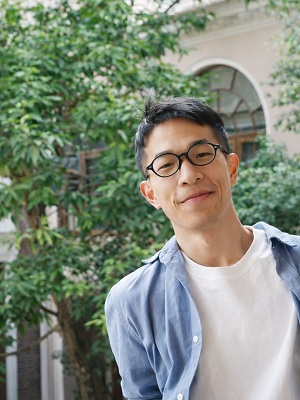
Award Winner 2026:
Dr. Qilin Cao (Tongji University, China)
(click the photo for the bio of the author and the award winning article)
Dr. Qilin Cao (Tongji University, China)
(click to access the article. Copyright 2025, Duke University Press. All rights reserved. Republished by permission of the publisher. www.dukeupress.edu)
Qilin Cao (pronounced “Chi-lin Tsao”) is an assistant professor in the School of Foreign Studies at Tongji University, Shanghai, China. He received his MA and PhD in Translation Studies from the University of Macau. His research interests lie at the intersection of translation studies, comparative literature, and cultural studies, with a particular focus on the materiality of translation and how translation theory engages with emerging digital trends. His articles can be found in journals including positions: asia critique, Modern Asian Studies, International Journal of Asian Studies, Neohelicon, Orbis Litterarum, Asia Pacific Translation and Intercultural Studies and Journal of Translation Studies. His first monograph, Translation as the Gaze: Conceptualizing the Sino-Western Encounter, 1839–1949 (Routledge), is forthcoming in April 2026.
Runner up 2026:
Dr. Mattea Cussel (Universitat Autònoma de Barcelona, Spain)
(click the photo for the bio of the author and the award winning article)
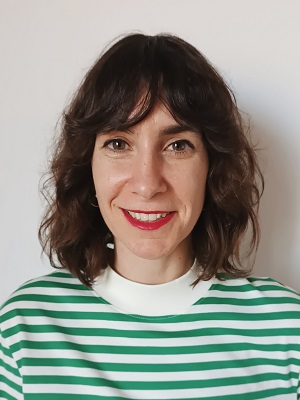
Dr. Mattea Cussel (Universitat Autònoma de Barcelona, Spain)
Cussel, Mattea. (2025) "An Ethnographic Account of Spanish-language Publishing and Reading in the United States: The Role of and Attitudes towards Translation", Translation in Society 4(2): 1-21.
(Available for open access at: https://doi.org/10.1075/tris.24023.cus)
Mattea Cussel is “Juan de la Cierva” Postdoctoral Researcher in the Department of Translation, Interpreting and East Asian Studies at the Universitat Autònoma de Barcelona. Her research focuses on the sociology of translation, particularly in relation to migration, theory and literature. Her work has been published in Translation Studies, Social Science Information, Translation and Interpreting Studies, and Translation in Society, among others. Her monograph Migration Literature in Translation was recently published by Routledge. She is currently co-editing, with Jonathan Evans and Fruela Fernández, the second edition of The Routledge Handbook of Translation and Politics.
She holds a PhD in Translation Studies from the Universitat Pompeu Fabra. Following her doctorate, she has conducted postdoctoral research on the politics of translation in the humanities and social sciences, as well as on access to healthcare and intercultural communication for migrated populations.
The Martha Cheung Award for Best English Article in Translation Studies by an Early Career Scholar
Announcement of 2025 Award Winner and Runner Up
The Centre for Translation at Hong Kong Baptist University is pleased to announce that the winner of the 2025 Martha Cheung Award is Dr. Hisham M. Ali, Research Fellow at the Department of Arabic Studies, KU Leuven, Belgium, for his article entitled ‘Bourdieu’s Trajectory Concept as an Approach to Microhistorical Research in Translation’, published in Translation in Society, 3/2 (2024).
Dr. Ali’s article makes a significant contribution to the sociology of translation. It develops the Bourdieusian concept of ‘trajectory’ to produce a nuanced micro-history of an individual translator. Using as a case study the multifaceted career of Tharwat Okasha, former Egyptian Minister of Culture, it traces the multiple positions he occupied in different fields, including diplomacy, writing, and translation. More specifically, it analyses how Okasha traversed different fields (the military, psychology, history and journalism) and the impact of this movement on his translation practices. The concept of trajectory is shown to be capable of producing a non-linear description of life events that accounts for the fragmented and entangled nature of history, bringing different social agents into the picture, including the army, Free Officers, publishers and the Muslim Brotherhood.
Runner up
The runner up for 2025 is Ms. Zhemeng Xu, PhD candidate in Sinology at KU Leuven, Belgium, for her article entitled ‘When Dialectica and Logica Travelled East: An Early Modern Chinese Translation of ‘Logic’ in Mingli tan’, published in Asian Studies, 12/2 (2024).
Ms. Xu’s article offers a comprehensive, in-depth analysis of the introduction and influence of Aristotelian logic in China through the lens of the term mingli, introduced in Mingli tan 名理探 (Investigation of Name-Patterns), a translation that marks the first detailed introduction of Aristotelian logic into China. It further traces the use of mingli in later Chinese translations of logic from the late Qing period onward and demonstrates that the Chinese understanding of logic was limited to the scope delineated by mingli for a long time. This only changed when the phonetic translation luoji (邏輯) eventually became the official and most commonly used equivalent to logic. The study underscores the complexities of cross-cultural translation and the evolution of conceptual paradigms and offers important insights into the historical exchange of ideas between China and the West.
Award Winner 2025:
Dr. Hisham M. Ali (KU Leuven, Belgium)
(click the photo for the bio of the author and the award winning article)
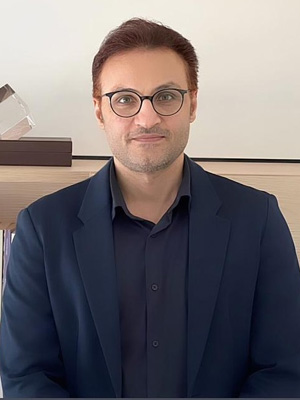
Dr. Hisham M. Ali (KU Leuven, Belgium)
Ali, Hisham M. (2024) "Bourdieu's Trajectory Concept as an Approach to Microhistorical Research in Translation", Translation in Society 19: 133-155.
(Available for open access at: https://doi.org/10.1075/tris.23023.ali)
Hisham M. Ali is a Research Fellow at KU Leuven’s Department of Arabic Studies, where he also earned his PhD in Translation Studies. His current research examines the role of literature and translation in the standardization and legitimization of the Egyptian vernacular. More broadly, his research interests lie at the intersection of literature, translation, media, and nationalism in the Arab world. His work has appeared in journals such as Translation in Society, National Identities, Modernism/modernity, Babel, Pragmatics, Interférences littéraires, Perspectives: Studies in Translation Theory and Practice, Journal of Translation Studies, among others. In addition, he regularly contributes articles to Arabic-language news websites such as Arabic Post (formerly HuffPost Arabi). He is also a Senior Translation Specialist at Hamad Bin Khalifa University in Qatar, where he supervises MA students in translation as part of the internship course, conducts workshops on advanced translation, and oversees the university’s interpreting unit.
Runner up 2025:
Ms. Zhemeng Xu (KU Leuven, Belgium)
(click the photo for the bio of the author and the award winning article)
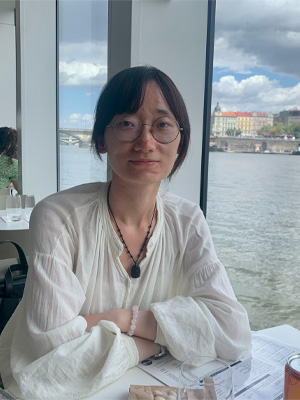
Ms. Zhemeng Xu (KU Leuven, Belgium)
Xu, Zhemeng (2024) "When Dialectica and Logica Travelled East: An Early Modern Chinese Translation of ‘Logic’ in Mingli tan", Asian Studies, 2024. 05. 6: 63-92.
Available for open access at: https://doi.org/10.4312/as.2024.12.2.63-92
Zhemeng Xu is a PhD candidate in Sinology at KU Leuven (Belgium), supervised by Prof. Nicolas Standaert. She earned her bachelor's degree in Translation and Interpreting from Fudan University and her master's degree in Translation Studies from the Chinese University of Hong Kong. Her research focuses on translations collaboratively produced by European missionaries and Chinese literati during the late Ming and early Qing periods, with particular attention to both the roles played by Chinese figures in and around translation and the conceptual shifts enacted through translation. Her broader research interests include contacts between cultures, translation history, intellectual history, and Chinese Christianity. In her free time, she's a badminton enthusiast.
Martha Cheung Award 2024 Winner and Two Runners Up
The Martha Cheung Award for Best English Article in Translation Studies by an Early Career Scholar
Announcement of 2024 Award Winner and Two Runners Up
The SISU Baker Centre for Translation and Intercultural Studies is pleased to announce that the winner of the 2024 Martha Cheung Award is Dr. Trask Roberts, Kent State University, US, for his article entitled ‘Evoking Pure Narrative in La Chanson de Roland’s Laisses Similaires’, published in Exemplaria Medieval, Early Modern, Theory, 34/2 (2023).
Dr. Roberts offers a theoretically rich rereading of the famed laisses similaires of the Oxford manuscript of La Chanson de Roland to highlight how contradictory elements such as emotions, actions and dialogue stubbornly resist being smoothed away in order to achieve conventional narrative harmony. These laisses similaires, successive retellings of presumably the same event in different words, occur at several key moments in the text and have attracted scholarly attention for their particularity and confounding nature. Winding his way from the work of Barbara Cassin on untranslatability and Rita Copeland’s concept of ‘accidents of translation’ to Walter Benjamin’s seminal ‘Task of the Translator’, Roberts convincingly argues that the laisses similaires evoke ‘pure narrative’, which he defines based on Benjamin’s concept of reine Sprache (pure language). Roberts adapts Walter Benjamin’s concept of pure language — which proposes that through their intersections and totality, languages tangentially approach a language free from the burden of signifying — from the context of translation to narrative theory, positing an analogous term: pure narrative. Laisses similaires are thus treated as types of translations for an inexistent, and impossible, original. Just as all idioms gesture towards, without arriving at, pure language, no one laisse expresses pure narrative. Ultimately, he argues that “just as Benjamin’s pure language is not one that means, the laisses similaires point to a narrative that does not narrate”.
Runners up
Two further submissions have been deemed by reviewers and the Award Committee to be of outstanding quality and therefore deserve mention as runners up. The first runner up is Dr. Yan Jia, Peking University, China, who was also runner up in 2021 with an article entitled ‘Trans-Asian Popular Aesthetics: The reception of Hindi popular fiction in 1980s China’. The second runner-up is Dr. Lydia Hayes-Harris, University of Leeds, University College London, ZOO Digital, UK.
Dr. Jia’s article, entitled ‘‘Eastern Literature’ as Happenstance? Re-reading Indian Literature in 1980s Chinese Magazines’, appeared in the Journal of World Literature 8/2 (2023). It focuses on the publication of translated Indian literature in Chinese popular literary journals from the 1980s to the early 2000s. More specifically, it examines how ‘Eastern literature’ was perceived and presented in the making of world literature in 1980s China, an era of political and cultural opening up, through the lens of Indian literature included in the magazine Shijie Wenxue. Although the magazine’s editors discursively championed the idea of geographic all inclusiveness, the larger conjuncture brought ‘Western literature’ to the forefront of attention. ‘Eastern’ authors and texts, in contrast, were confined to a state of ‘happenstance’, due to the occasional manner of their presentation. However, by re-reading Shijie Wenxue on three levels, the author argues that the magazine managed to produce a relatively eclectic and ‘thick’ knowledge of Indian literature, which would have otherwise been neglected because of its tokenistic appearance and low visibility. Adopting a more creative and critical mode of reading, it is possible to turn the seemingly Western-centric project of Shijie Wenxue into a useful archive for readers with a special interest in ‘Eastern literature’.
The article by Dr. Hayes-Harris, entitled ‘English Dubs: Why are anglophone viewers receptive to English dubbing on streaming platforms and to foreign-accent strategies?’, appeared in Íkala: Revista de lenguaje y cultura 28/2 (2023). Accents are often used in fictional audiovisual products to contribute to the creation of a particular character identity. This strategy relies on the typical association between a particular set of cultural connotations and a given accent within a specific language community. However, the author questions the assumption of a coherent, stable language community today. In the age of streaming platforms, and at the rate the localization industry has been creating subtitles and revoiced versions, the target audience for many products has become multilingual. The English ‘dubbing revolution’, pioneered by streaming giant Netflix, depicts the broadening of target audiences in global distribution clearly. The article focuses in particular on the popularly termed ‘foreignization’ strategy, as it features in English dubs. The strategy is explored in relation to the novelty of (English) dubbing for most viewers as well as the ubiquity of foreign varieties of English in everyday life in the Anglosphere and, consequently, in English-language original fiction. The analysis offers theoretical insights into the unique acceptance of English dubbing in general, and of foreign accents as a dubbing strategy in particular. The case of the Castilian-Spanish dubbing industry is explored for contrastive purposes, elucidating the characteristics of (im)mature dubbing audiences: their habits, preferences and (in)flexibility. The conclusions present a set of hypotheses that provide plausible answers to the questions posed in the article’s title.
March 2024
On behalf of the SISU Centre and the Award Committee
Robert Neather, Chair of Award Committee
Award Winner 2024:
Dr. Trask Roberts (Kent State University, US)
(click the photo for the bio of the author and the award winning article)
Dr. Trask Roberts (Kent State University, US)
Roberts, Trask (2023) ‘Evoking Pure Narrative in La Chanson de Roland’s Laisses Similaires’, Exemplaria Medieval, Early Modern, Theory 34(2): 322-340.
Trask Roberts earned a PhD in French and Francophone studies from the University of Pennsylvania and is an assistant professor of French and translation at Kent State University. Prior to joining the faculty at Kent State, he was a visiting scholar at the University of Paris (formerly Paris-VII). His primary research areas are 20th-century French literature, translation studies, queer studies, self-translation, and autobiography. His essays have appeared in the Journal of Modern Literature, Symposium, the Journal of Beckett Studies, Electric Lit, Exemplaria, Hopscotch, and elsewhere. Dr. Roberts’ current project is a monograph in which he explores the relationship between self-writing and self-translation in a corpus of 20th-century author-translators writing in French and English.
Available open access until July 2024 at: https://www.tandfonline.com/doi/full/10.1080/10412573.2022.2154016 (DOI: https://doi.org/10.1080/10412573.2022.2154016)
Award Runner-up 2024:
Dr. Yan Jia (Peking University, China)
(click the photo for the bio of the author and the award winning article)
Dr. Yan Jia (Peking University, China)
Jia, Yan (2023) ‘“Eastern Literature” as Happenstance? Re-reading Indian Literature in 1980s Chinese Magazines’, Journal of World Literature 8(2): 21-234.
Yan Jia is Assistant Professor of Hindi and Indian literature at Peking University. He holds a PhD in Cultural, Literary and Postcolonial Studies from SOAS, University of London. He specializes in the fields of modern Hindi literature, China-India literary relations, and the religious culture of India. His research papers have appeared in various peer-reviewed journals, such as Journal of World Literature (twice), World Literature Studies and History Compass, as well as in several edited volumes published by noted academic presses. His article “Trans-Asian Popular Aesthetics: The reception of Hindi popular fiction in 1980s China” was awarded runner-up position for the 2021 Martha Cheung Award.
Available open access until December 2024 at: https://brill.com/view/journals/jwl/8/2/article-p213_3.xml (DOI: 10.1163/24056480-00802003)
Award Runner-up 2024:
Dr. Lydia Hayes-Harris (University of Leeds, University College London, ZOO Digital, UK)
(click the photo for the bio of the author and the award winning article)

Dr. Yan Jia (Peking University, China)
Jia, Yan (2023) ‘“Eastern Literature” as Happenstance? Re-reading Indian Literature in 1980s Chinese Magazines’, Journal of World Literature 8(2): 21-234.
Yan Jia is Assistant Professor of Hindi and Indian literature at Peking University. He holds a PhD in Cultural, Literary and Postcolonial Studies from SOAS, University of London. He specializes in the fields of modern Hindi literature, China-India literary relations, and the religious culture of India. His research papers have appeared in various peer-reviewed journals, such as Journal of World Literature (twice), World Literature Studies and History Compass, as well as in several edited volumes published by noted academic presses. His article “Trans-Asian Popular Aesthetics: The reception of Hindi popular fiction in 1980s China” was awarded runner-up position for the 2021 Martha Cheung Award.
Available open access until December 2024 at: https://brill.com/view/journals/jwl/8/2/article-p213_3.xml (DOI: 10.1163/24056480-00802003)
Martha Cheung Award 2023 Winner and Two Runners Up
The Martha Cheung Award for Best English Article in Translation Studies by an Early Career Scholar
Announcement of 2023 Award Winner and Two Runners Up
The SISU Baker Centre for Translation and Intercultural Studies is pleased to announce that the winner of the 2023 Martha Cheung Award is Dr. Peter Freeth, Aston University, for his article entitled ‘“Germany asks: Is it OK to laugh at Hitler?” Translating humour and Germanness in the paratexts of Er ist wieder da and Look Who’s Back’, published in Translation Spaces 10/1 (2021).
Dr. Freeth argues that within imagological approaches, paratexts can provide insights into how the Other of translated literature is presented to a new target audience. Within a transnational context, such as Germany and Britain’s shared experience of the Second World War, the question is whether the source- and target-culture paratexts can invoke the same images. Through a case study of Er ist wieder da, a novel that satirises Germany’s relationship with its National Socialist past, and the British publication of the English translation Look Who’s Back, his article finds that while the novel’s humour is reframed by the British publisher, the novel’s controversial position within Germany’s coming to terms with its National Socialist history discourse remains intrinsic to the paratexts published in the British press. As such, this article demonstrates the transnational relevance of individual national characteristics to the paratextual framing of translated literature, the value of paratexts as objects of imagological study, and the methodological benefits of distinguishing between production- and reception-side paratexts.
Runners up
Two further submissions have been deemed by reviewers and the Award Committee to be of outstanding quality and therefore deserve mention as runners up. In alphabetical order, the runners up are Dr. Jan Buts, Boğaziçi University, Turkey, and Dr. Irene Hermosa-Ramírez, Universitat Autònoma de Barcelona, Spain.
Dr. Buts’s article, entitled ‘Invented languages, intertextuality, and indirect translation: Wilde’s Salomé in Esperanto’, appeared in Translation Studies 15/2 (2022). It discusses two competing versions of Oscar Wilde’s Salomé that were translated into Esperanto indirectly. Salomé was originally written in French and is a retelling of a biblical story. The English translation of the play, sometimes taken to be the original, flaunts its biblical heritage, often through direct quotation from the King James Version. However, there was no canonical Bible in Esperanto at the time of translation, making it impossible to achieve equivalent effect by means of parallel intertextual references. The relation between equivalence and intertextuality is just one example of a central issue in the study and practice of translation that is thrown into sharp relief when considering invented languages. Esperanto is in many ways a language of translation, and studying its literature may enrich not only the linguistic scope of translation studies research but also its theoretical apparatus.
The article by Dr. Hermosa-Ramírez, entitled ‘Physiological Instruments Meet Mixed Methods in Media Accessibility’, appeared in Translation Spaces 11/1 (2022). It argues that mixed methods have an established trajectory in the social sciences and in Audiovisual Translation and Media Accessibility Studies. Yet, publications in the latter field often fail to discuss the mixed-method nature of the study in depth, be it because of space limitations or a lack of deliberate integration of the methods. At the same time, Audiovisual Translation and Media Accessibility Studies has seen a boom in experimental research, as descriptive approaches have given way to reception and user-centred studies that engage in the cognitive processes and immersion of audiences. The article proposes a methodological basis for researchers in the field to design studies employing physiological instruments within a mixed methods framework. The core mixed methods designs (convergent, explanatory, and exploratory) are presented, and examples of their applications to research employing physiological instruments are discussed.
As in previous installments of the Award, the Committee will attempt to gain permission from publishers to provide open access copies of all three articles on the website of the Centre. A further circular with relevant links will be sent out in due course.
March 2023
On behalf of the SISU Centre and the Award Committee
Robert Neather, Chair of Award Committee
Award Winner 2023:
Dr. Peter Freeth (Aston University, UK)
(click the photo for the bio of the author and the award winning article)
Dr. Peter Freeth (Aston University, UK)
Freeth, Peter Jonathan (2021) ‘“Germany asks: is it OK to laugh at Hitler?”: Translating humour and Germanness in the paratexts of Er ist wieder da and Look Who’s Back’, Translation Spaces 10/1: 32-65.
Peter J. Freeth holds a PhD from the University of Leeds and is currently a Teaching Fellow in Translation Studies at Aston University. His research primarily focuses on the sociological position and role of translators in relation to their professional visibility, particularly as manifested in digital paratextual spaces. His PhD thesis on the subject is available open access and he has several forthcoming publications developing this work further, including the co-edited volume Beyond the translator’s invisibility; a paper on his concept of collateral paratextuality in a special issue of Translation Studies edited by Kathryn Batchelor and Chiara Bucaria; and a discussion of the opportunities and challenges posed by digital microhistories of translation and translators. Alongside his research and teaching, Peter works with Berlin-based publisher V&Q Books and runs workshops on translation and German-language literature for cultural institutions and universities across the UK and Ireland.
Available open access until the end of 2023 at: https://www.jbe-platform.com/content/journals/10.1075/ts.20003.fre
Award Runner-up 2023:
Dr. Jan Buts (Boğaziçi University, Turkey)
(click the photo for the bio of the author and the award winning article)
Dr. Jan Buts (Boğaziçi University, Turkey)
Buts, Jan (2022) ‘Invented languages, intertextuality, and indirect translation: Wilde’s Salomé in Esperanto’, Translation Studies 15/2.
Jan Buts is Assistant Professor at the Department of Translation and Interpreting Studies, Boğaziçi University, Turkey. He is part of the IndirecTrans Network and co-coordinates the Genealogies of Knowledge Research Network. He is a member of the Executive Council of IATIS, the International Association for Translation & Intercultural Studies. His research interests include translation theory, corpus linguistics, conceptual history, and online media. His publications have appeared in journals such as Translation Studies, Perspectives, and Translation Spaces. He is currently involved in the development of the Oslo Medical Corpus.
Award Runner-up 2023:
Dr. Irene Hermosa-Ramírez (Universitat Autònoma de Barcelona, Spain)
(click the photo for the bio of the author and the award winning article)
Dr. Irene Hermosa-Ramírez (Universitat Autònoma de Barcelona, Spain)
Hermosa-Ramírez, Irene (2022) ‘Physiological instruments meet mixed methods in Media Accessibility’, Translation Spaces 11/1: 38-59.
Irene Hermosa-Ramírez, PhD in Translation and Intercultural Studies (Autonomous University of Barcelona), is a postdoctoral researcher working for the Erasmus+ ATHENA project (Bringing Accessibility and Design for All into Higher Education Curricula) and a member of the TransMedia Catalonia research group. She is also working as a research support technician at Universitat Pompeu Fabra for the UNIVAC project, which is devoted to sensory accessibility at Spanish universities. Irene is the secretary of the Catalan Association for the Promotion of Accessibility.
Martha Cheung Award 2022 Winner and Two Runners Up
The Martha Cheung Award for Best English Article in Translation Studies by an Early Career Scholar
Announcement of 2022 Award Winner and Two Runners Up
The SISU Baker Centre for Translation and Intercultural Studies is pleased to announce that the winner of the 2022 Martha Cheung Award is Dr. Kasia Szymanska, Centre for European Studies, Trinity College Dublin, for her article entitled ‘Peeping through the Holes of a Translated Palimpsest in Jonathan Safran Foer’s Tree of Codes’, published in Contemporary Literature 61/1 (2021).
Dr. Szymanska argues that comparative textual media (media studies) should work more closely with translation studies, and supports this argument by examining the example of Jonathan Safran Foer’s die-cut book Tree of Codes (2010). Her highly intricate analysis combines the perspectives of literary studies, translation studies and media studies, bringing to the fore two issues that have been so far neglected in criticism. These are: firstly, the significance of erasing a literary translation, namely, a text that represents another text written in a different language and directly inaccessible cultural reality; and secondly, the possibility of interpreting Foer’s die-cut book beyond the two-dimensional erasure convention and treating it as a see-through web of words and obscured fragments which can meaningfully illuminate each other. In doing so, the study proposes a broader understanding of Foer’s translatorial gesture. By foregrounding the very medium of translation and the palimpsestic quality of the book project, it brings to light different possible understandings of the act of erasure, including cultural, textual, material and translatorial ones.
Runners up
Two further submissions have been deemed by reviewers and the Award Committee to be of outstanding quality and therefore deserve mention as runners up. In alphabetical order, the runners up are Gökhan Firat, University of Surrey, and Dr. Simon Leese, Utrecht University, The Netherlands.
Firat’s article, entitled ‘Uberization of Translation: Impacts on Working Conditions’, appeared in The Journal of Internationalization and Localization 8/1 (2021). It explores the critical literature on digital labour platforms from a labour studies perspective and presents the findings of a quantitative survey of 70 translation workers residing in Turkey and working on/for digital labour platforms. Firat argues that the introduction of digital labour platforms into translation production and business networks has not yet provided a significant contribution to the working conditions of translation workers in Turkey. Instead, their working conditions have been rearranged and reorganized in accordance with the uberization of (translation) work. Engaging in such work on/for digital labour platforms exposes translation workers to risks related to employment status, income level, work-life balance, social protections, free agency, bargaining power, dependence on the platform, allocation of risks and rewards, and data collection, protection and privacy.
The article by Dr. Leese, entitled ‘Arabic utterances in a Multilingual World: Shāh Walī-Allāh and Qur’anic translatability in North India’, appeared in Translation Studies 14/2 (2021). It explores the way in which Arabic texts reached multilingual audiences in North India in the eighteenth century. Drawing on a remarkable treatise on translating the Qur’an into Persian by the Delhi intellectual Shāh Walī-Allāh (d. 1176/1762), it argues that so-called “interlinear” translations functioned to preserve the sound of Arabic utterances as well as their meaning. By anchoring another language to Arabic utterances, these translations also reified symbolic hierarchies between Arabic and languages used to translate it. Walī-Allāh’s understanding of translatability was closely tied up with notions of Qur’anic structure (nazm) and the sonic qualities of the Arabic language, but was also informed by a sensitivity to linguistic difference in the multilingual society in which he lived.
As in previous instalments of the Award, the Committee will attempt to gain permission from publishers to provide open access copies of all three articles on the website of the Centre. A further circular with relevant links will be sent out in due course. In the meantime, Dr. Leese’s article is already published open access and available on the journal website.
For further information on the Martha Cheung Award, visit Martha Cheung Award.
March 2022
On behalf of the SISU Centre and the Award Committee
Robert Neather, Chair of Award Committee
Award Winner 2022:
Dr. Kasia Szymanska (Trinity College Dublin, Ireland)
(click the photo for the bio of the author and the award winning article)

Dr. Kasia Szymanska (Trinity College Dublin, Ireland)
Szymanska, Kasia (2021) ‘Peeping through the Holes of a Translated Palimpsest in Jonathan Safran Foer’s Tree of Codes’, Contemporary Literature 61(1): 32-65.
Bio: Dr. Kasia Szymanska is Assistant Professor in the School of Languages, Literatures and Cultural Studies at Trinity College Dublin and Research Associate of the Oxford Comparative Criticism and Translation centre. Her work on the intersection of literature, translation, multilingualism and politics has been published in PMLA, Contemporary Literature, Slavic and East European Journal, edited volume Prismatic Translation, and several other venues. Her first book project Translation Multiples: From Global Culture to Postcommunist Democracy discussed a new genre of writing which multiplies different translation variants. She is currently working on two other projects: The Other Europe: Dividing the Continent Through Text, Travel and Translation as well as an edited volume entitled The Tender Translator: Olga Tokarczuk Across Languages. She received the 2015 EST Translation Prize and judged the 2018 Oxford-Weidenfeld Translation Prize.
Available open access until 10 May 2022 at: http://cl.uwpress.org/content/61/1/32.full.pdf+html
Award Runner-up 2022:
Gökhan Firat (University of Surrey, UK)
(click the photo for the bio of the author and the award winning article)

Gökhan Firat (University of Surrey, UK)
Fırat, Gökhan (2021) ‘Uberization of translation: Impacts on working conditions’, The Journal of Internationalization and Localization, 8(1): 48-75.
Bio: Gökhan Fırat is a PhD Student and Postgraduate Researcher at the University of Surrey, Centre for Translation Studies and his current research focuses on the collaborative and cooperative forms of human translation (translaboration and transcooperation) within and across digital platforms by exploring their challenges and opportunities and assessing their impacts on translation workers. Before joining the University of Surrey, he worked in the publishing and translation industries for more than ten years as a book translator, editor, copy-editor, project coordinator, operations manager, business development manager, technology consultant and trainer. Gökhan holds a BA in Translation and Interpreting and completed his MA in Translation Studies with a research focusing on the impacts of the current techno-political transformation of the language industry on translation workers. He translated and edited many books into the Turkish language from authors such as Noam Chomsky, Charles Dickens and Arthur Canon Doyle.
Available open access until the end of 2022 at: https://www.jbe-platform.com/content/journals/10.1075/jial.20006.fir
Award Runner-up 2022:
Dr. Simon Leese (Independent Researcher)
(click the photo for the bio of the author and the award winning article)
Dr. Simon Leese (Independent Researcher)
Leese, Simon (2021) ‘Arabic utterances in a multilingual world: Shāh Walī-Allāh and Qur’anic translatability in North India’, Translation Studies, 14(2): 242-261.
Bio: Simon Leese holds a PhD from SOAS, London and has been a postdoctoral researcher at Utrecht University. From May 2022 he will be a visiting researcher at Humboldt-Universität zu Berlin. His research focuses on the connections that Arabic poetry has forged between the Middle East and South Asia, and multilingual histories of literary taste and poetic love.
Available open access at: https://www.tandfonline.com/doi/full/10.1080/14781700.2021.1919192
Martha Cheung Award 2021 Winner and Two Runners Up
The Martha Cheung Award for Best English Article in Translation Studies by an Early Career Scholar
Announcement of 2021 Award Winner and Two Runners Up
The SISU Baker Centre for Translation and Intercultural Studies is pleased to announce that the winner of the 2021 Martha Cheung Award is Dr. Gabriele Salciute Civiliene of the Department of Digital Humanities, King’s College London, UK, for her article entitled ‘Between Surface and Depth: Towards embodied ontologies of text computing across languages’, published in Interdisciplinary Science Reviews 45/2 (2020).
Dr. Salciute Civiliene’s study is a highly original, interdisciplinary contribution that offers new insights into the study of translation. It provides a critical consideration of what underlies the epistemo-methodological impasses of the mainstream approach to repetition in translation studies, and considers the possibility of a new practice for cross-linguistic quantitative reading. The article demonstrates how data visualization based on the computational analysis of translated text can illuminate our understanding of cognition and perception. Translation theory is shown to present an interesting problem for the Digital Humanities, one that fundamentally complicates text computing and challenges the flat dimensions of quantification. Dr. Salciute Civiliene draws on her research into the design of cross-linguistic distant reading and the modelling of repetition strings as equivalents of dynamic translatorial response to argue for and demonstrate the possibility of thick computing as suspended between textual surfaces and depths.
Runners up
Two further submissions have been deemed by reviewers and the Award Committee to be of outstanding quality and therefore deserve mention as runners up. In alphabetical order, the runners up are Dr. Christian Olalla-Soler, Università di Bologna, Italy, and Dr. Yan Jia, Peking University, China.
Dr. Olalla-Soler’s article, entitled ‘Practices and Attitudes toward Replication in Empirical Translation and Interpreting Studies’, appeared in Target 32/1 (2020). It presents the results of three studies on practices in and attitudes toward replication in empirical translation and interpreting studies. Replication, a central concept in the scientific method, is defined as the repetition of the methods that led to a reported finding. The article provides evidence-based arguments for initiating a debate about the need for replication in empirical translation and interpreting studies and its implications for the development of the discipline.
The article by Dr. Yan Jia, entitled ‘Trans-Asian Popular Aesthetics: The reception of Hindi popular fiction in 1980s China’, appeared in the Journal of World Literature, Volume 4 (2019). It examines the Chinese reception of Gulshan Nanda (1929–1985), one of the best-selling writers of Hindi popular fiction in the 1960s and 1970s. The article argues that Nanda’s popular fiction contributed to China’s cultural reconstruction in the 1980s by fulfilling the previously repressed need of Chinese readers for entertaining novels that conveyed a desired moral order, by enabling Chinese translators of Indian literature to engage with the literary debate about the re-evaluation of popular literature, and by helping revitalize Chinese theatre in a time of crisis. The study demonstrates the complexity of transnational flows of popular literature by presenting a Trans-Asian example that relies on the melodramatic appeal of the works, their relevance to local issues, and the scholarly engagement in the host culture, rather than the author’s global stardom or the marketing strategies of multinational publishing companies.
As in previous instalments of the Award, the Committee will attempt to gain permission from publishers to provide open access copies of all three articles on the website of the Centre. A further circular with relevant links will be sent out in due course.
For further information on the Martha Cheung Award, visit Martha Cheung Award.
March 2021
On behalf of the SISU Centre and the Award Committee
Robert Neather, Chair of Award Committee
Award Winner 2021:
Dr Gabriele Salciute Civiliene (King’s College London, UK)
(click the photo for the bio of the author and the award winning article)
Dr Gabriele Salciute Civiliene (King’s College London, UK)
Salciute Civiliene, Gabriele (2020) ‘Between surface and depth: towards embodied ontologies of text computing across languages, Interdisciplinary Science Reviews, 45(2): 117-140.
Abstract: Translation theory and cases present to the Digital Humanities an interesting problem that fundamentally complicates text computing and challenges the flat dimensions of quantification. While distant reading, for example, in one language is relatively straightforward, computation across languages poses epistemo-semiotic challenges. What it is here to overcome, among other things, is technological conformism rooted in predominantly monolingual digital textual scholarship; disembodied textual ontologies that arise from some reductive forms of quantitative reading as well as the hierarchical discretization of a text; and, finally, thin computing that gratifies the notions of text as inscription rather than as experience, which echoes the problem raised by Geertz’s anthropological concept of ‘thick description’. By drawing on my research into the design of cross-linguistic distant reading and the modelling of repetition strings as equivalents of dynamic translatorial response, I will discuss a possibility of thick computing as suspended between textual surfaces and depths.
Available open access until mid-April 2022 at: https://www.tandfonline.com/doi/full/10.1080/03080188.2020.1764800
Award Runner-up 2021:
Dr. Christian Olalla-Soler (Università di Bologna, Italy)
(click the photo for the bio of the author and the award winning article)
Dr. Christian Olalla-Soler (Università di Bologna, Italy)
Olalla-Soler, Christian (2020) ‘Practices and Attitudes toward Replication in Empirical Translation and Interpreting Studies’, Target 32(1): 3-36.
Abstract: This article presents the results of three studies on practices in and attitudes toward replication in empirical translation and interpreting studies. The first study reports on a survey in which 52 researchers in translation and interpreting with experience in empirical research answered questions about their practices in and attitudes toward replication. The survey data were complemented by a bibliometric study of publications indexed in the Bibliography of Interpreting and Translation (BITRA) (Franco Aixelá 2001–2019) that explicitly stated in the title or abstract that they were derived from a replication. In a second bibliometric study, a conceptual replication of Yeung’s (2017) study on the acceptance of replications in neuroscience journals was conducted by analyzing 131 translation and interpreting journals. The article aims to provide evidence-based arguments for initiating a debate about the need for replication in empirical translation and interpreting studies and its implications for the development of the discipline.
Available open access until the end of 2021 at: https://www.jbe-platform.com/content/journals/10.1075/target.18159.ola
Award Runner-up 2021:
Dr Yan Jia (Peking University, China)
(click the photo for the bio of the author and the award winning article)
Dr Yan Jia (Peking University, China)
Jia, Yan (2019) ‘Trans-Asian Popular Aesthetics: The reception of Hindi popular fiction in 1980s China’, Journal of World Literature 4(4): 530–551.
Abstract: From 1980 to 1991, seven titles of Gulshan Nanda’s Hindi popular fiction were translated into Chinese without Western involvement, and Kaṭī pataṅg alone spawned nearly twenty adaptations in both theatrical and picture-story book forms. This essay argues that Nanda’s popular fiction contributed to China’s cultural reconstruction in the 1980s by fulfilling the previously repressed need of Chinese readers for entertaining novels that conveyed a desired moral order, by enabling Chinese translators of Indian literature to engage with the literary debate about the re-evaluation of popular literature, and by helping revitalize Chinese theatre in a time of crisis. This paper shows the complexity of transnational flows of popular literature by presenting a Trans-Asian example that relies on the melodramatic appeal of the works, their relevance to local issues, and the scholarly engagement in the host culture, rather than the author’s global stardom or the marketing strategies of multinational publishing companies.
Available open access at: https://brill.com/view/journals/jwl/4/4/article-p530_5.xml
Martha Cheung Award 2020 Winner and Two Runners Up
The Martha Cheung Award for Best English Article in Translation Studies by an Early Career Scholar
Announcement of 2020 Award Winner and Two Runners Up
The SISU Baker Centre for Translation and Intercultural Studies is pleased to announce that the winner of the 2020 Martha Cheung Award is Dr. Joanna Rzepa of the University of Essex, UK, for her article entitled ‘Translation, Conflict and the Politics of Memory: Jan Karski’s Story of a Secret State’, published in Translation Studies 11/3 (2018).
Dr. Rzepa’s study examines the interaction of translations and retranslations of historical texts and political narratives of the past. Focusing on English-Polish translation and the portrayal of Polish-Jewish relations during World War II in Jan Karski’s Story of a Secret State, she argues that textual and paratextual revisions in subsequent editions of the book are embedded in larger dominant narratives of the past. Examining the role played by translations in the debates on the Holocaust and Polish-Jewish wartime relations, her article suggests that translated texts can influence memory politics and national identity formation. Thus, translators and publishers of translated texts can be viewed as political and historical agents whose work simultaneously shapes and is shaped by cultural memory of the past in various national and historical contexts.
Runners up
Two further submissions have been deemed by reviewers and the Award Committee to be of outstanding quality and therefore deserve mention as runners up. In alphabetical order, the runners up are Dr. Sofía Sánchez-Mompeán of the University of Murcia, Spain and Dr. Sophie Ling-chia Wei of the Chinese University of Hong Kong.
Dr. Sánchez-Mompeán’s article, entitled ‘Prefabricated Orality at Tone Level: Bringing Dubbing Intonation into the Spotlight’, appeared in Perspectives: Studies in Translatology 28/2 (2019). It focuses on dubbing intonation, and more specifically on the tonal patterns that are regularly found in dubbed speech and characterise prefabricated orality at tone level. Arguing that dubbed dialogue is governed by its own network of rules and differs greatly from spontaneous and naturally-occurring speech, the study sets out to search for regularities in the delivery of dubbing intonation in a Spanish corpus and to explore whether they can have an impact on the reception of orality by the Spanish audience. Dr. Sánchez-Mompeán uses a speech analysis programme to examine a repertoire of tones in a number of extracts from the Spanish dubbed version of the sitcom How I Met Your Mother, and demonstrates that there are several prefabricated patterns that belong to dubbing intonation itself, and that some of the dominant trends found could directly impinge on the target audience’s understanding of the sitcom.
The article by Dr. Wei, entitled ‘In the Light and Shadow of the Dao – Two Figurists, Two Intellectual Webs’, appeared in the Journal of Translation Studies – New Series 2/2 (2018), published by the Chinese University of Hong Kong. It focuses on Jesuit missionary-translators in early Qing China, the pressures they encountered and support offered by their patrons as factors of control that shaped their translations. Examining correspondence and manuscripts stored in the Vatican Library and the Archives Jésuites de Paris, Dr Wei outlines the profiles of two Figurists and identifies the institutional or individual support each received. Her analysis demonstrates that the intellectual webs of their patrons not only made an impact on how each man developed and circulated his knowledge of the Chinese classics, but also influenced how they interpreted the Dao and the Dao de jing. Their translations are shown to have left a lasting legacy and to have impacted the European understanding of the Dao.
For further information on the Martha Cheung Award, visit Martha Cheung Award.
March 2020
On behalf of the SISU Centre and the Award Committee
Robert Neather, Chair of Award Committee
Award Winner 2020:
Dr. Joanna Rzepa (University of Essex, UK)
(click the photo for the bio of the author and the award winning article)
Dr. Joanna Rzepa (University of Essex, UK)
Rzepa, Joanna (2018) ‘Translation, Conflict and the Politics of Memory: Jan Karski’s Story of a Secret State’, Translation Studies 11(3): 315-332.
Abstract: This article examines the interaction of translations and retranslations of historical texts and political narratives of the past. Focusing on English-Polish translation and the portrayal of Polish-Jewish relations during World War II in Jan Karski’s Story of a Secret State, the article argues that textual and paratextual revisions in subsequent editions of the book are embedded in larger dominant narratives of the past. Examining the role played by translations in the debates on the Holocaust and Polish-Jewish wartime relations, the article suggests that translated texts can influence memory politics and national identity formation. Thus, translators and publishers of translated texts can be viewed as political and historical agents whose work simultaneously shapes and is shaped by cultural memory of the past in various national and historical contexts.
Available open access at: https://www.tandfonline.com/doi/full/10.1080/14781700.2018.1459310
Award Runner-up 2020:
Dr. Sofía Sánchez-Mompeán
(click the photo for the bio of the author and the award winning article)

Dr. Sofía Sánchez-Mompeán (University of Murcia, Spain)
Sánchez-Mompeán, Sofia (2019) ‘Prefabricated Orality at Tone Level: Bringing Dubbing Intonation into the Spotlight’, Perspectives: Studies in Translatology 28(2): 284-299.
Abstract: The focus of this article is placed on dubbing intonation and more specifically on the tonal patterns that are regularly found in dubbed speech and characterise prefabricated orality at tone level. Research suggests that dubbed dialogue is governed by its own network of rules and differs greatly from spontaneous and naturally-occurring speech. The prefabricated nature of this type of dialogue has received attention from many scholars, but no attempt has been made to date to describe orality at tone level from an empirical perspective. The aim of this paper is to search for regularities in the delivery of dubbing intonation in a Spanish corpus and to explore whether they can have an impact on the reception of orality by the Spanish audience. A speech analysis programme has been used to examine a repertoire of tones in a number of extracts from the Spanish dubbed version of the sitcom How I met your mother (Bays & Thomas, 2005–2014). Findings reveal that there are several prefabricated patterns that belong to dubbing intonation itself and that some of the dominant trends found could directly impinge on the target audience’s perception.
Available open access at: https://www.tandfonline.com/doi/full/10.1080/0907676X.2019.1616788
Award Runner-up 2020:
Dr. Sophie Ling-chia Wei (Chinese University of Hong Kong, China)
(click the photo for the bio of the author and the award winning article)
Dr. Sophie Ling-chia Wei (Chinese University of Hong Kong, China)
Wei, Sophie Ling-chia (2018) ‘In the Light and Shadow of the Dao – Two Figurists, Two Intellectual Webs’, Journal of Translation Studies – New Series 2(2): 1-22.
Abstract: Seen through the lens of André Lefevere’s concept of rewriting, a translation is not simply a static text, but a cultural and even a political act exercised by players at both the individual and institutional levels during the translation process. Jesuit missionary-translators in early Qing China especially encountered pressures, challenges and support from their patrons as factors of control in their translations. Joachim Bouvet and his two protégés, Joseph de Prémare and Jean François Foucquet, were the three representative Figurists of the time. The Figurists, a group of Jesuits who focused on the re-interpretation of Chinese classics, advocated the esoteric doctrines of the Dao. Despite both being called followers of Bouvet, Prémare and Foucquet diverged in their separate interpretations of the Dao. Their own preferences and propensities were part of the reason for this, though patronage also played a significant role, which reinforced and supported their personal interpretations of the Dao. This paper will examine two intellectual webs of relationships and auspices, those of Prémare and Foucquet. Examining their correspondences and manuscripts stored in the Vatican Library and the Archives Jesuites de Paris, I will outline the profiles of the two Figurists and identify the institutional or individual support each received. Furthermore, the intellectual webs of their patrons not only made an impact on how each man developed and circulated his knowledge of the Chinese classics, but also influenced how they interpreted the Dao and the Daodejing. Each of their trajectories in associating Christianity with the Dao also made a lasting impact on the next generation of Jesuits in China on their understanding of Dao and Daoism.
Martha Cheung Award 2019 Winner and Two Runners Up
The Martha Cheung Award for Best English Article in Translation Studies by an Early Career Scholar
Announcement of 2019 Award Winner and Two Runners Up
The Baker Centre for Translation and Intercultural Studies is pleased to announce that the winner of the 2019 Martha Cheung Award is Dr. Yasmin Moll of the University of Michigan, USA, for her article entitled ‘Subtitling Islam: Translation, Mediation, Critique’, published in Public Culture 29/2 (2017).
Dr. Moll’s study examines subtitling practices at Iqraa, a satellite television channel designed to promote Islamic da’wa (‘outreach’ or ‘preaching’) within both Muslim-majority and Muslim-minority societies. It argues that the subtitlers see their task as twofold: to act as ‘cultural mediators’ responsible for countering perceived Western stereotypes about Muslims on the one hand, and, on the other, to transmit as ‘preachers by proxy’ correct and relevant religious knowledge to viewers when, at times, the Arab preachers they subtitle fail to do so. These translators feel authorized to contest through subtitles both external representations of Islam and internal interpretations of divine intent. Their acts of translation, and their internal debate at Iqraa, exceed the familiar Euro-American antimony of fidelity and betrayal. The article is based on extensive fieldwork and draws on and contributes to scholarship in media studies, translation studies and cultural anthropology. It demonstrates a fine-grained attention both to the actual and contingent ways in which subtitles are created and to the different motivations behind their creation, showing how translation on Islamic television is entwined in multiple stakes at multiple scales, whether those are aspirations for professional excellence, desires for a more just geopolitical order, or longing for divine salvation.
Runners up
Two further submissions have been deemed by reviewers and the Award Committee to be of outstanding quality and therefore deserve mention as runners up. In alphabetical order, the runners up are Dr. Qian Menghan of Beijing International Studies University, China and Dr. Wine Tesseur of the University of Reading, UK.
The article by Dr. Qian, entitled ‘Penguin Classics and the Canonization of Chinese Literature in English Translation’, appeared in Translation and Literature 26/3 (2017). It examines the process by which translated Chinese literature becomes canonical in the anglophone literary system. Adopting a notion of the ‘classic’ that takes into account both essentialist and historical stances, it examines Penguin Classics originally written in Chinese from the perspective of choice of texts, translations, publishing, and literary-critical reception. It addresses the questions: What is the current canon of Chinese literature in English translation? What are the forces that certify some Chinese works as deserving canonical status in anglophone culture? And what consequences might the politics of recognition have for the understanding of world literature at large? The author argues that translated texts are valorized by multiple mediators within institutional frameworks, and the status they are accorded reflects the structures of the global literary economy.
Dr. Tesseur’s article, entitled ‘Incorporating Translation in Sociolinguistic Research: Translation Policy in an International Non-governmental Organisation’, was published in the Journal of Sociolinguistics 21/5 (2017). It explores aspects of translation, multilingualism and language policy in the field of transnational civil society. By focusing on translation policies at Amnesty International, an international non‐governmental organisation that performs a key role in global governance, the article seeks to contribute to a globalisation‐sensitive sociolinguistics. It argues that combining a sociolinguistic approach – more precisely linguistic ethnography – with translation studies leads to an increased understanding of the language practices under study. The article also calls for more interdisciplinary research, arguing that there is space for sociolinguistics and translation studies to contribute to research in international relations and development studies by highlighting the role of multilingualism and challenging the traditionally powerful position of English in transnational civil society.
For further information on the Martha Cheung Award, visit Martha Cheung Award.
March 2019
On behalf of the SISU Centre and the Award Committee
Robert Neather, Chair of Award Committee
Award Winner 2019:
Dr. Yasmin Moll (The University of Michigan, USA)
(click the photo for the bio of the author and the award winning article)
Dr. Yasmin Moll (The University of Michigan, USA)
Moll, Yasmin (2017) ‘Subtitling Islam: Translation, Mediation, Critique’, Public Culture 29(2): 333-361.
Abstract: Egyptian translators working at Iqraa—the world’s first Islamic television channel—use a variety of strategies in subtitling Arabic-language preaching programs into English. These translators see their task as twofold: to act as “cultural mediators” responsible for countering perceived Western stereotypes about Muslims, on the one hand, and, on the other, to transmit as “preachers by proxy” correct and relevant religious knowledge to viewers when, at times, the Arab preachers they subtitle fail to do so. Translators feel authorized to contest through subtitles both external representations of Islam and internal interpretations of divine intent. Far from being just exercises in interlingual equivalence, subtitling is a form of moral critique motivated by both postcolonial and theological imperatives. These acts of translation, and their internal debate at Iqraa, exceed the familiar Euro-American antimony of fidelity and betrayal.
Available open access for one year at: https://read.dukeupress.edu/public-culture/article/29/2%20(82)/333/31094/Subtitling-Islam-Translation-Mediation-Critique
Award Runner-up 2019:
Dr. Qian Menghan (Beijing International Studies University, China)
(click the photo for the bio of the author and the award winning article)
Dr. Qian Menghan (Beijing International Studies University, China)
Qian, Menghan (2017) ‘Penguin Classics and the Canonization of Chinese Literature in English Translation’, Translation and Literature 26(3): 295-316.
Abstract: This article examines the process by which translated Chinese literature becomes ‘canonical’ in the anglophone literary system. Adopting a notion of the ‘classic’ that takes into account both essentialist and historical stances, it conducts a study of Penguin Classics originally written in Chinese under the aspects of choice of texts, translations, publishing, and literary-critical reception. It addresses the questions: What is the current canon of Chinese literature in English translation? What are the forces that certify some Chinese works as deserving canonical status in anglophone culture? And what consequences might the politics of recognition have for the understanding of world literature at large? It argues that translated texts are valorized by multiple mediators within institutional frameworks, and the status they are accorded reflects the structures of the global literary economy.
Available open access until 30 June at: https://www.euppublishing.com/doi/abs/10.3366/tal.2017.0302
Award Runner-up 2019:
Dr. Wine Tesseur (The University of Reading, UK)
(click the photo for the bio of the author and the award winning article)
Dr. Wine Tesseur (The University of Reading, UK)
Tesseur, Wine (2017) ‘Incorporating Translation in Sociolinguistic Research: Translation Policy in an International Non-governmental Organisation’, Journal of Sociolinguistics 21(5)
Abstract: This article explores aspects of translation, multilingualism and language policy in the field of transnational civil society. By focusing on translation policies at Amnesty International, an international non‐governmental organisation that performs a key role in global governance, this article seeks to contribute to a globalisation‐sensitive sociolinguistics. It argues that combining a sociolinguistic approach – more precisely linguistic ethnography – with translation studies leads to an increased understanding of the language practices under study. Furthermore, the article calls for more interdisciplinary research, stating that there is space for sociolinguistics and translation studies to contribute to research in international relations and development studies by highlighting the role of multilingualism and challenging the traditionally powerful position of English in transnational civil society.
Available open access for six months at: https://onlinelibrary.wiley.com/doi/abs/10.1111/josl.12245