Media School
The terms audiovisual translation, media translation and translation technologies have acquired and continue to enjoy great visibility in the field of translation studies. This International Research School for Media Translation and Digital Culture (MTDC) fosters an open and wide-ranging take on media translation and digital culture, and the significance of both for and beyond translation studies; encourages cross-fertilization between the disciplinary sub-fields designated by the above terms; and addresses the new theoretical and methodological tools that translation scholars need in order to understand the strategic and catalyzing role played by translation in relation to a number of issues, including the following:
- Reconfiguring the ecology of networked media – from mainstream news organizations to citizen journalism outlets; from printed written articles to multimodal assemblages; from professional reportage to amateur coverage of conflicts and natural disasters;
- (Re)producing shifting public discourses about cosmopolitanism, gender, nation, expertise, fandom or activism – among other core issues;
- Developing more collaborative, participatory and deliberative processes of community formation, both online and on the ground;
- Enabling disciplinary discourses and developments in the fields of multimodality, media sociology, cultural studies, journalism, globalization studies and critical theories of communication technology.
The School is aimed at an international audience and primarily addresses the needs of doctoral and early career researchers in translation, interpreting and intercultural studies, as well as more experienced academics who are new to the discipline or interested in engaging with recent developments in the field. It contributes to advancing the study of translation in the context of digital (audiovisual) media and online spaces.
The School takes place once every two years at Hong Kong Baptist University, rotating with the Translation Research Summer School.

Conceptual Remit
The School focuses on a range of related issues. The list below is meant as an indicative rather than exhaustive survey of such issues and themes:
- Translation, materiality and mediality: print culture, mass media culture, digital media culture;
- Media and globalization: instantaneity, deterritorialization and audience fragmentation;
- Translation of multimodal texts;
- Translation and self-mediation: participation, remediation and bricolage;
- Citizen media and amateur forms of translation;
- Media translation in situations of conflict and natural disasters;
- Social networking: communities and networks;
- Critical approaches to new technologies: questions of ethics, critical approaches to tech usage, how tech is changing conceptions of labour, etc.;
- New contexts of production and consumption in media translation: crowdsourcing and activism.


Syllabus and Organization
The School consists of five modules:

Module 1
Theoretical Approaches
2 x 90-minute sessions (A, B)

Module 2
Research Methods
2 x 90-minute sessions (A, B)

Module 3
Research Design & Dynamics
2 x 90-minute sessions (A, B)

Module 4
Featured Theme
2 x 90-minute sessions (A, B)

Module 5
Academic Career Development
2 x 90-minute sessions (A, B)
Each module encompasses three contact hours and approximately six hours of guided reading.
Group tutorials cover a range of topics and are designed to address themes that are relevant to participants’ current research, as outlined in their personal statements.
On the final day, students present their work to fellow students and staff and receive verbal feedback.
Students of MTDC are allowed to choose one of two pathways:

Pathway 1
Pathway 1 caters for the vast majority of participants – those working towards a completion certificate.
Pathway 1 students
- deliver a presentation of their proposed research project on the final day of the School;
- submit a research proposal (between 2,000 and 3,000 words long, excluding the bibliography) by the end of September;
- attend three group tutorials during the School.
Pathway 2
Pathway 2 caters for participants working towards an attendance certificate only.
Pathway 2 students
- choose whether they wish to attend tutorials during the school (they will have expressed their interest in doing so via their participation form);
- do not deliver a presentation nor submit a research proposal.
Students in Pathway 1 will deliver a presentation of their research project on the final day of the School.
Presentations should last 10 minutes, followed by a 5-minute discussion session. They provide an opportunity for students to receive feedback from their peers and tutors in attendance.
Pre-School
As part of the application process, and prior to registration, all participants are required to submit a Personal Statement outlining the reasons for and scope of their interest in the topics to be covered in the School. In the event of oversubscription, preference will be given to applicants who, as part of their personal statement, can provide evidence of having undertaken research at postgraduate level of any aspect of the interface between translation studies and the media. All personal statements, to be reviewed by the School’s Academic Directors Luis Pérez-González & Kyung Hye Kim, should be submitted at this online platform.
Post-School
Participants wishing to receive a Completion Certificate are required to submit a Research Project Proposal (between 2,000 and 3,000 words long, excluding the bibliography) within three months of attending the School. Guidelines for writing the proposal are provided during the Research School.
Completion Certificates are issued to the Pathway 1 applicants whose proposal is deemed satisfactory by the School tutors and detail the number of contact hours and hours of guided reading completed.
Attendance certificates are issued to the Pathway 2 participants at the end of the School.
Core Staff
The School is staffed by a core group of visiting and local academics. Additional tutors are involved on a one-off basis on different years, as required by the relevant featured theme. Not all members of the core group will necessarily be involved in each session of the School.
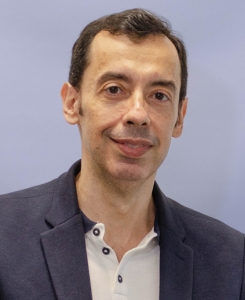
Luis Perez-Gonazlez (Prof.)
Professor Luis Pérez-González
Academic Director, International Research School for Media Translation and Digital Culture (MTDC)
Luis Pérez-González is Professor of Translation Studies at the University of Agder, Norway, and a member of China’s Audiovisual Translation and Dissemination Committee (established by the State Administration of Radio, Film and Television and China Alliance of Radio, Film and Television) and the Chinese Culture Translation and Studies Support Network. Former Editor of the Interpreter and Translator Trainer, he is the author of Audiovisual Translation: Theories, Methods and Issues (Routledge 2014), editor of the Routledge Handbook of Audiovisual Translation (2019), co-editor of the Routledge Encyclopedia of Citizen Media (2021), and co-editor of the Routledge series Critical Perspectives on Citizen Media. His articles have appeared, among other journals, in Palgrave Communications, The Translator, The Journal of Language and Politics, Convergence: The International Journal of Research into New Media, International Journal of Cultural Studies, Journal of Pragmatics and Language and Intercultural Communication. He has acted as a consultant for the European Agency for Reconstruction on the development of translation and interpreter training programmes and translation certification mechanisms in Eastern Europe, and for the European Commission on a project on the social impact of translation in multilingual communities. He curates content on audiovisual and media translation on his personal website.
Professor Luis Pérez-González
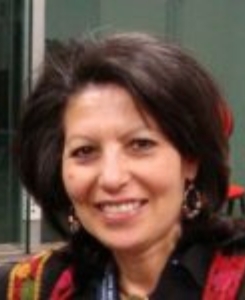
Mona Baker (Prof.)
Professor Mona Baker
Academic Director, Translation Research Summer School (TRSS)
Tutor, International Research School for Media Translation and Digital Culture (MTDC)
Mona Baker is Affiliate Professor at the Centre for Sustainable Healthcare Education (SHE) at the University of Oslo, co-cordinator of the Genealogies of Knowledge Research Network, and Honorary Dean of the Graduate School of Translation and Interpreting, Beijing Foreign Studies University. She is a recipient of the 2015 Kuwait Foundation for the Advancement of Sciences Award in the field of Arts and Languages, Studies in Foreign Languages and Literatures, and honoree of the 2011 Fifth Session of Abdullah Bin Abdulaziz International Award for Translation, for contributions to the field of translation. Baker is author of In Other Words: A Coursebook on Translation (third edition 2018) and Translation and Conflict: A Narrative Account (2006; Classics edition 2018), co-author (with Eivind Engebretsen) of Rethinking Evidence in the Time of Pandemics: Scientific vs Narrative Rationality and Medical Knowledge Practices, and editor of Translating Dissent: Voices from and with the Egyptian Revolution (2016; winner of the Inttranews Linguists of the Year award for 2015), Routledge Encyclopedia of Translation Studies (third edition 2020, co-edited with Gabriela Saldanha), Critical Concepts: Translation Studies (4 volumes, Routledge, 2009), and Critical Readings in Translation Studies (Routledge, 2010). She is also a founding co-editor of Encounters in Translation. Her articles have appeared in a wide range of international journals, including Humanities and Social Sciences Communications, Social Movement Studies, Critical Studies on Terrorism, Social Semiotics, The Translator and Target. She posts on translation, citizen media and Palestine on her personal website and tweets at @MonaBaker11.
Professor Mona Baker
Jonathan Evans (Dr.)
Dr. Jonathan Evans
Tutor, International Research School for Media Translation and Digital Culture (MTDC)
Jonathan Evans is Reader in Translation Studies at the University of Glasgow, Scotland, UK. He is the author of The Many Voices of Lydia Davis (2016), co-author of Fan Translations (forthcoming), and co-editor of the Routledge Handbook of Translation and Politics (2018) and Translating and Receiving Korean Media (forthcoming). He is Deputy Editor of Journal of Specialised Translation. His research has been funded by the Arts and Humanities Research Council (UK), the Economic and Social Research Council (UK), the Fund for International Collaboration (FIC), and the Newton Fund/British Academy. His articles appear in a range of international journals such as Screen, Feminist Media Studies, Transnational Screens, Analog Game Studies, Translation Studies, Translation and Literature, and others. His research interests lie in the uses people make of translated media and texts.
Dr. Jonathan Evans
Henry Jones (Dr.)
Dr. Henry Jones
Tutor, International Research School for Media Translation and Digital Culture (MTDC)
Henry Jones is Lecturer in Translation Studies at the University of Manchester, UK. He is a co-coordinator of the Genealogies of Knowledge Research Network and co-editor of the Routledge Encyclopedia of Citizen Media (2021). His current research interests include corpus-based translation studies, translation history, media theory and online translating communities.
Dr. Henry Jones

Kyung Hye Kim (Dr.)
Dr. Kyung Hye Kim
Academic Co-Director, International Research School for Media Translation and Digital Culture (MTDC) & Translation Research Summer School (TRSS)
Kyung Hye Kim is Assistant Professor at Dongguk University, South Korea. She conducts interdisciplinary research on the various ways in which translation impacts and shapes cross-cultural communication and challenges dominant discourses in society, particularly in the areas of corpus-based translation studies and in audiovisual translation. She is a member of the Genealogies of Knowledge Research Network, and Chair of the Conference Committee of IATIS, the International Association for Translation & Intercultural Studies, and Chair of the International Cooperation Committee of the Korean Association for Translation Studies.
Dr. Kyung Hye Kim
Neil Sadler (Dr.)
Dr. Neil Sadler
Tutor, International Research School for Media Translation and Digital Culture (MTDC)
Neil Sadler is Senior Lecturer in Translation and Interpreting at The University of Leeds, UK. His monograph Fragmented Narrative: Telling and interpreting stories in the Twitter age (2021), examines the implications of the fragmentation characteristic of Twitter, and much contemporary communication more broadly, for narrative production and reception. He has chapters forthcoming in the edited volumes Debates in Translation Studies and the Routledge Handbook of Translation Theories and Concepts and his previous publications include articles in New Media & Society, Disaster Prevention and Management, and the Journal of North African Studies. He also contributed entries on ‘Twitter’ and ‘Social Media’ to the Routledge Encyclopedia of Citizen Media (2021) and translated three entries from Arabic to English for the Routledge Anthology of Arabic Discourse on Translation (2022).
Dr. Neil Sadler