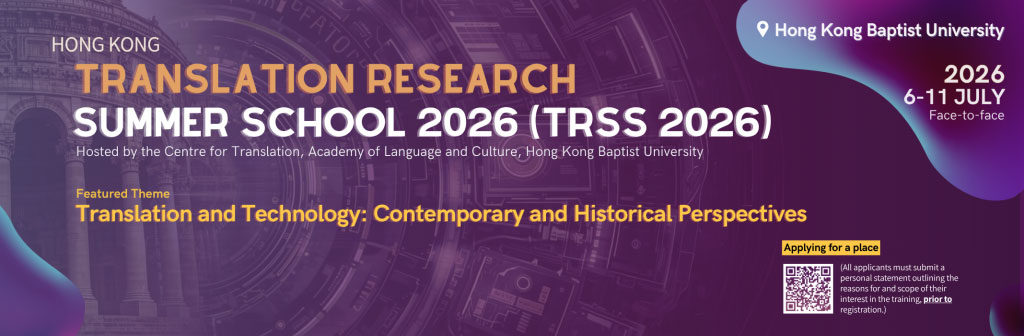
Translation Research Summer School 2026




MODULE 1 | Theoretical Approaches
Session 1A | Maialen Marin-Lacarta
Translation and Materiality
In media studies, as early as the 1950s and 1960s scholars began to challenge the view of media as neutral containers for storing and transmitting content. McLuhan (1964) famously argued that “the medium is the message”, emphasizing that technologies themselves — rather than the content they carry — should be the primary focus of study. Translation studies took up questions of materiality more recently, particularly from the 2010s onward, through the work of scholars such as Karin Littau and Anne Coldiron. Littau was among the first in the field to argue that “[m]edia actively shape our perceptions and consequently also our mindsets, not through the content they carry, but through their material and technical properties” (2016: 87, italics in original). This session will engage with key debates sparked by Littau’s 2016 article, entitled ‘Translation and the materialities of communication’, and the responses it generated, highlighting questions of materiality and non-human agency that remain highly relevant today. We will also discuss more recent contributions from Littau (2022) and O’Connor (2022). Through specific examples of books, images and other artifacts, the session will explore theoretical questions concerning the materiality of translations, the role of tools in understanding translation as a material practice, and contemporary debates surrounding the non-human agency of tools and objects.
Session 1B | Sue-Ann Harding
Translation, Technology and the Lodestar of Justice
This session offers an examination and exploration of the concept of justice: what it means, how it is understood and applied in various disciplines, including Translation Studies, and how we might use it as a guiding concept in our research and translation practices, particularly in relation to our technological tools and the technological meshworks in which we are all embedded. Beyond the legal frameworks of nation states and international bodies, the concept is increasingly used to specify sites of inequalities and thus coalesce efforts for positive, and just, change. Activists and policy makers, for example, talk about social justice, language justice, environmental justice, transitional justice, epistemic justice, and tech justice, all of which are deeply entangled with translation. Drawing on selected key texts from our field and beyond that critically engage with ethics and rights, the session invites students to reflect on our intersectional positions in relation to current technological tools and systems, reflecting on how we might be guided by a central concept of justice as we use, navigate, challenge and re-imagine these tools and systems in our translation scholarship and practice.
MODULE 2 | Research Methods in Translation Studies
Session 2A | Maialen Marin-Lacarta
Collaborative Translation and Technology
The stereotypical image of the lonely translator, especially within literary translation, has been debunked by researchers who investigate the collaborative nature of translation (Cordingley and Frigau Manning 2017). The use of technology as a collaborative tool has further expanded the possibilities of collective translation practices, enabling new forms of interaction between translators, communities and machines. After introducing various historical instances of collaborative translation, this session will examine the diverse definitions encompassed by this umbrella term. We will explore the reasons for scholars’ delayed focus on the collaborative nature of translation by situating this subdiscipline within the historical development of Translation Studies as a field. In addition, we will delve into the various subcategories and nuanced meanings associated with this meta-concept (Zwischenberger 2022), such as crowdsourcing, volunteer translation, community translation and user-generated translation, among others. Drawing on authentic examples from research that examines collaborative translation in different areas, the session will cover questions of research design, data collection and analysis. Additionally, we will discuss how a collaborative understanding of translation can help us investigate the interaction between humans and technology in the translation process, especially in an era where advancements like neural machine-translation and Artificial Intelligence are transforming the profession. Finally, the session will also touch upon the social and ethical consequences of collaborative translation, particularly in the context of studies on volunteer translation, profit-driven crowdsourcing, and machine-centred collaboration.
Session 2B | Kyung Hye Kim
Corpus Building and Research in the Age of AI
Corpus-based methodology has proven to be a powerful tool of analysis in translation and interpreting studies, particularly in contrastive and diachronic analysis: from the analysis of translation and language contact and change (Malamatidou 2016) to investigations into institutional translators’ mediation of Chinese political discourse (Pan, Fu and Li 2023) and conceptual analysis (Karimullah 2020; Buts et al. 2021). Although the design of a corpus will vary depending on the specific research questions scholars set out to address, collecting authentic, naturally occurring text – of real-life language use – to be stored in a machine-readable form, is a crucial prerequisite for any corpus-based research. Establishing thorough and appropriate text selection criteria to ensure the representativeness of the sample texts chosen is also essential as this forms the foundation for the interpretation of the linguistic patterns identified in the analysis.
However, as Buts (2025) rightly points out, the notions of representativeness and text authenticity are being seriously challenged in the current era of generative AI. With AI now deeply embedded in our daily practices, including collecting, generating, editing, processing, and translating both texts and images, what constitutes an ‘authentic’ and ‘representative’ text has become increasingly problematic. The rapid proliferation of AI-generated and AI-translated content raises critical questions about the very nature of the data we analyse, as the line between human- and machine-translated text is becoming ever more blurred. In this context, it is difficult, for example, to argue that the patterns identified are truly representative of human communication and to determine whose voice and whose style are being represented – whether that of the original human author or the machine translator. Against this backdrop, this session will critically re-examine the definition and purpose of corpus-based research in light of the challenges posed by AI and the digital age. It will also discuss the theoretical implications of the new landscape and suggest new avenues for translation studies research, focusing on issues of data authenticity, methodological adaptation, and ethical concerns.
MODULE 3 | Research Design and Dynamics
Session 3A | Sue-Ann Harding
Research in Digitized Archives: Dangers, Delights, Diversion and Discovery
This session is an invitation to students to consider archives, especially digitized archives and online collections of written texts, images and maps, as potentially rich sources of material for their research, even if they don’t think of themselves as primarily historians or researchers of translation history. We will look briefly at this growing area, including ways in which scholars have used archives to not only research translators and translations (Munday 2014, Paloposki 2016), but also to critique ways in which archives themselves, with their diversity of organization, cataloguing, restrictions and accessibility, are translations of history, memory and the past (Footitt 2022, Strowe 2021, Constanza Guzmán 2020). Such studies are often motivated by a curiosity about what is missing and a political intention to seek out and make visible people, places and narratives commonly overlooked and dismissed by more mainstream, reductionist accounts of the past (Atefmehr & Farahzad 2021). Drawing on two research projects of my own that extensively use digitised archives and online collections and are also driven by that same curiosity and political intention, the session will introduce some key online collections that students might find useful and intriguing and track some of the rewarding and frustrating moments of the (often invisible) research process to map out how we might find, navigate, critique, use and translate such available materials in our scholarship.
Session 3B | Robert Neather
Researching Translation, Extinction and Climate Change in the Museum: The Design and Execution of a Funded Project
Extinction and climate change have become issues of increasing importance across the public sphere. As institutions that are major drivers of public narratives, museums seek to grapple with how best to frame these issues of ecological disaster. They must consider how to balance competing needs for scientific rigour, affective engagement and meaningful action while also negotiating the potential for fuelling eco-anxiety or again being seen as overly politically active within their often government- and donor-sponsored contexts. Translation studies has likewise seen a growth of interest in climate change, and has also developed a solid body of research on translation in museums. However, questions surrounding the translation of extinction and ecological disaster in the museum context have only recently begun to be addressed.
This session examines the case of a recently completed funded project undertaken to address this research gap. In approaching the translation of extinction and climate change, the project understands translation as a broad category, in which interlingual translation is only one component in the overall translation of knowledge that happens in a museum exhibition. The session will give an account of the project from the design of the research proposal on paper to its actual execution, which involved certain adjustments in direction and approach as the research developed. It thus seeks both to give a sense of how research design works in the context of a funding proposal, and how it plays out in practice as particular issues arise.
MODULE 4 | Featured Theme:
Translation and Technology: Contemporary and Historical Perspectives
Session 4A | Jan Buts
Translation and Technology: Past and Present
Following Williams (1974) and Castells (1996), this session will explore the trajectory of key technological advances in recent history, including AI, and their complex interaction with the job market and living standards, with particular reference to the translation and interpreting profession. Despite the current hype surrounding AI, our experience of technological advances in relatively recent history suggests that a deterministic model of the potential impact of AI may not prove realistic. Such a model would assume that AI will determine the conditions for social and political change, including change in the labour market and in the extent to which translators can exercise agency. An alternative model of technology might assume that AI is a symptom rather than a determinant of social change, a by-product of a preset course of social progress. The purposes to which AI is put would in this sense have been foreseen and required by this already unfolding social and political process. Both scenarios leave the profession with little room for manoeuvre or ability to resist the negative impact of AI. Following both Castells and Williams, however, it is possible to acknowledge that technologies like AI are often developed by powerful actors, with the support of the state and big business and with specific purposes in mind. At the same time, technologies can also be adapted by social actors in ways that diverge from and may even undermine the purposes for which they were developed. This opens up the possibility of adapting to the technology in order to survive and prosper in the new AI environment, and at the same time critiquing it and seeking to adapt it to varying degrees in some contexts and resist it altogether in situations where working with it would directly undercut the autonomy and welfare of its users or participate in the exploitation of others.
Session 4B | Jan Buts
Translation, Sustainability and Technology
AI-generated and machine translation are increasingly called upon to provide immediate, multilingual dissemination of data in a growing number of venues. They are promoted in part through a rhetoric of equity, despite the considerable volume of literature that outlines some of the ways in which they exacerbate already entrenched inequities in the global circulation of knowledge (Bowker 2025). AI and machine translation can deliver large quantities of research and other types of data in multiple languages almost instantaneously, and at low cost compared to human labour. But behind the rhetoric of equity and diversity and the attendant freemium interfaces presented to the public and the scientific community lies an unethical and extractive model of translation and authorship that has unprecedented environmental, labour, and cultural costs (Boéri and Baker 2025). Studies of translators’ responses to the rise of generative AI, moreover, suggest that they do not trust this technology and have concerns about how their data is appropriated and used to undercut their livelihood, rendering the entire profession unsustainable in future. This session will outline some of the main areas of concern in the development and use of generative AI models, focusing on issues of equity and environmental cost, and their implications for the future of the profession.
MODULE 5 | Academic Career Development
Session 5A | Kyung Hye Kim
Publishing in International Journals
Publishing in peer-reviewed international journals has become key to progress in an academic career, but this endeavour can be very stressful, especially for early-career researchers. Identifying a suitable outlet, pitching it at the right level, responding to review comments, writing a rebuttal letter, and communicating with editors during revision processes can be challenging as well. Moreover, some of the research assessment systems of academic institutions emphasise quantity over quality or even disregard book chapters and articles published in non-SSCI/A&HCI indexed journals. Certain academic institutions attach more importance to publishing outside primary fields of study, yet the different expectations and writing styles of each journal often mean that none of these related fields appreciate interdisciplinary work.
On the basis of the presenter’s experience as an editor, peer reviewer and author who has worked in higher education institutions with such a system, this session will cover the entire publishing process—from writing a paper in English, implementing strategic measures to find an appropriate journal, submitting manuscripts and undergoing review stages to dealing with rejection. The session will also include a discussion of (un)solicited book reviews and publishing beyond the field of translation studies, particularly in journals associated with other disciplinary domains that are potentially of interest to audiovisual and media translation scholars.
Session 5B | Maialen Marin-Lacarta
Applying for External Funding for Research Projects
After the completion of their doctoral studies, academics are required to apply for competitive research grants throughout their career, from individual projects to collaborative grants as their career progresses. Obtaining external funding for research projects is often a job prerequisite, and junior academics may lose their jobs if they fail. Based on the presenter’s experience in Hong Kong and Europe, this session will discuss best practices for developing successful proposals in the field of Translation and Interpreting. Special attention will be paid to various key elements that are becoming indispensable: interdisciplinarity, collaboration, novelty, feasibility and impact. The session will address issues such as finding suitable grants and funding agencies, choosing when to apply, identifying a project topic, preparing an application, and writing and structuring proposals. Through the analysis of project abstracts, participants will learn to identify strengths and weaknesses of project proposals. The session will draw on authentic examples of grants awarded by funding bodies in Hong Kong (University Grants Committee), Spain (Ministry of Science and Innovation) and Europe (European Research Council, Marie Skłodowska-Curie Actions), and that investigate a variety of themes such as translation in international NGOs, national politics and the reception of Russian literature in English, and digital translations and the production of knowledge.
Maialen MARIN-LACARTA (Dr.)
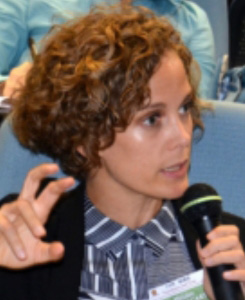
Dr. Maialen Marin-Lacarta
Tutor, Translation Research Summer School (TRSS)
Maialen Marin-Lacarta is Associate Professor at the Department of Translation, Interpreting and East Asian Studies of the Autonomous University of Barcelona. Prior to joining UAB, she was Senior Researcher at the Open University of Catalunya, where she was Principal Investigator of the DigiTrans project. Between 2014 and 2020, she was Assistant Professor in the Department of Translation, Interpreting and Intercultural Studies at Hong Kong Baptist University, where she received the President’s Award for Outstanding Performance as Young Researcher in 2019. She is also the awardee of the Jokin Zaitegi Basque National Award for her translation of Nobel Prize winner Mo Yan’s work into Basque (with Aiora Jaka), and the recipient of two General Research Fund grants by the University Grants Committee of Hong Kong (as Principal Investigator) and four Spanish government-funded grants (one as PI and three as Co-Investigator). Marin-Lacarta has published her research in Basque, French, Spanish, Chinese and English (in journals such as The Translator, Translation Studies, Perspectives and Meta). She has guest edited a special issue on Ethnographic Research in Translation and Interpreting Studies (with Chuan Yu) for The Translator and is the co-editor of 1611: A Journal of Translation History.
Sue-Ann Harding (Prof.)
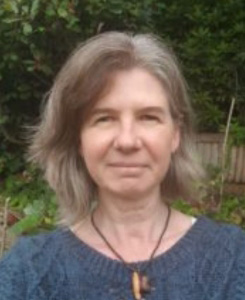
Professor Sue-Ann Harding
Tutor, Translation Research Summer School (TRSS)
Sue-Ann Harding is Professor in Translation and Intercultural Studies at Queen’s University Belfast, where she is the Director of the Centre for Translation and Interpreting. Her research interests are in social narrative theory as a mode of inquiry into translations and translated events, with a particular interest in sites of conflict and narrative contestation. She has a diverse research profile, publishing on online reportage, translations and commemorations of Russia’s 2004 Beslan hostage disaster; Qatar’s efforts to use institutional translation to cultivate a literary and culturally-engaged population; the translation of police interviews in South Africa; Arabic and Russian translations of Frantz Fanon’s writings; resonances between narrative and complexity theory; and translation processes in NGO development impact assessment research projects in Africa’s Sahel. She is the author of Beslan: Six Stories of the Siege (Manchester University Press, 2012); and co-editor (with Kathryn Batchelor) of Translating Frantz Fanon Across Continents and Languages (Routledge, 2017) and (with Ovidi Carbonell Cortés) of The Routledge Handbook of Translation and Culture (2018) She is the Chair of the Executive Council for the International Association of Translation and Intercultural Studies (IATIS), Reviews Editor for The Translator (Taylor and Francis), a member of the awards committee for The Martha Cheung Award for Best English Article in Translation Studies by an Early Career Scholar (Centre for Translation, Hong Kong Baptist University) and served as an ARTIS Associate (Advancing Research in Translation and Interpreting Studies). She is writing a book on archival, historical and contemporary narratives that translate the natural and urban landscapes of Qatar.
Kyung Hye Kim (Dr.)

Dr. Kyung Hye Kim
Academic Co-Director, International Research School for Media Translation and Digital Culture (MTDC) & Translation Research Summer School (TRSS)
Kyung Hye Kim is Assistant Professor at Dongguk University, South Korea. She conducts interdisciplinary research on the various ways in which translation impacts and shapes cross-cultural communication and challenges dominant discourses in society, particularly in the areas of corpus-based translation studies and in audiovisual translation. She is a member of the Genealogies of Knowledge Research Network, and Chair of the Conference Committee of IATIS, the International Association for Translation & Intercultural Studies, and Chair of the International Cooperation Committee of the Korean Association for Translation Studies.
NEATHER, Robert J (Dr.)
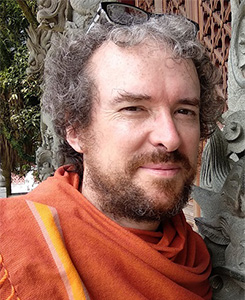
Research Fellow
| rneather@hkbu.edu.hk | |
| Telephone | (+852) 3411 2309 |
| ORCID | https://orcid.org/0000-0002-8313-9870 |
Profile
- Associate Professor, Department of Translation, Interpreting and Intercultural Studies
- United Nations certified translator and editor (Chinese/French into English)
- Member, IATIS Executive Council
Education
- Pg. Dip. in Interpreting and Translating (Chinese), University of Bath (1999)
- Ph.D. in classical Chinese literature, Queens’ College, University of Cambridge
Thesis: “The Fu Genre in the Mid-Tang: A Study in Generic Change” (1995) - B.A. in Chinese (double First Class), Queens’ College, University of Cambridge (1989)
Honours, Awards and Grants
- GRF grant (2015 – 2019) for project: “Collaborative Practice in Contemporary Buddhist Translation Communities”.
- GRF grant (2008 – 2011) for project: “Museums, Language and Cross-Cultural Communication: Bilingual/Multilingual Museum Texts and their Production”
- UN Competitive Examinations for English Language Translators/Précis-writers (passed 2009)
- UN Competitive Examinations for English Language Editors (passed, 2009)
Download/View CV
I have taught various courses in translation and interpreting since 1999, first at the University of Bath and then at City University of Hong Kong, before joining HKBU in 2007. My course teaching has been mainly in areas such as translation methodology and English stylistics. I also supervise projects at BA, MA and PhD levels. The courses that I have taught at HKBU include the following:
BA
- Introduction to Translation
- Principles and Methods of Translation
- English for Translators: Grammar, Structure and Style
- English for Translators II: Written Genres
- Communication and Translation
- Reading Chinese Literature in Translation
- Research Methods for Translation Studies
MA
- Bilingual Writing for Creative Industries
- Methods and Strategies of Translation
PhD
- Essential Readings
- NEATHER, Robert (2021) “Museums as Translation Zones”. In E. Bielsa and D. Kapsaskis (eds), The Routledge Handbook of Translation and Globalization, London: Routledge, pp. 306-319.
- NEATHER, Robert (2020) “Continuity and Change in Chinese Buddhist Discourse on Translation: Conceptions of Translation in Modern Buddhist Translator Guidelines”. Interventions: International Journal of Postcolonial Studies. (DOI: 10.1080/1369801X.2020.1854101)
- NEATHER, Robert (2020) “Buddhism and Buddhist Texts”. In Mona Baker and Gabriela Saldanha (eds) The Routledge Encyclopaedia of Translation Studies, 3rd Edition, London and New York: Routledge, pp. 70-75. (DOI: 10.4324/9781315678627)
- NEATHER, Robert (2020) “Collaborative Translation”, in Mona Baker and Gabriela Saldanha (eds) The Routledge Encyclopaedia of Translation Studies, 3rd Edition, London and New York: Routledge, pp. 70-75. (DOI: 10.4324/9781315678627)
- NEATHER, Robert (2019) “Argumentation and Generic Change in the Mid-Tang Fu: Li Guan’s (766-794) ‘Fu on Suffering the Pitiless Rains’ and the Role of the Shelun Genre”. In N.M. Williams (ed.), The Fu Genre of Imperial China: Studies in the Rhapsodic Imagination. Leeds: Arc Humanities Press, and Amsterdam: Amsterdam University Press, pp. 141-168.
- Neather, Robert (2018) “Museums, Material Culture, and Cultural Representations”. In Sue-Ann Harding and Ovidi Carbonell Cortés (eds) The Routledge Handbook of Translation and Culture, London and New York: Routledge, pp. 361-378.
- Neather, Robert (2014) “Visual Paratexts in Literary Translation: Intersemiotic Issues in the Translation of Classical Chinese Literature”. In Sandra Bermann and Catherine Porter (eds), A Companion to Translation Studies, Oxford: Wiley-Blackwell, pp. 504-515.
- Neather, J. (2012) “‘Non-Expert’ Translators in a Professional Community: Identity, Anxiety and Perceptions of Translator Expertise in the Chinese Museum Community”. The Translator 18 (2012): 245-268. (DOI: 10.1080/13556509.2012.10799510)
- Neather, Robert (2012) “Intertextuality, Translation and the Semiotics of Museum Presentation: The Case of Bilingual Texts in Chinese Museums”. Semiotica 192 (2012): 197-218. (DOI: 10.1515/sem-2012-0082)
- Neather, R.J. (2009) “Translation in a ‘Non-Translation’ Community: Practices, Ideologies and Conceptualizations of Translation in the PRC Museum Discourse Community”. Translation Quarterly 51&52 (December 2009): 145-176.
- Neather, R. (2008) “Translating Tea: On the Semiotics of Interlingual Practice in the Hong Kong Museum of Tea Ware.” META: Translators’ Journal, 53.1 (March 2008): 218-240. (DOI: 10.7202/017984AR)
- Neather, J. (2003) “The Translation of Generic Designations: The Case of the Fu Genre”. In Translation Quarterly 30: 1-26.
Research Interests
My research incorporates a strong interest in translation in intersemiotic environments and has focused particularly on the Chinese museum context. I have explored various issues in this area, including verbal/visual interactions in translation and the effects that such interactions have on translation strategy in the museum space; intertextuality in the construction of bilingual museum narratives; and issues of expertise and community identity in the collaborative production of translations, specifically in the Hong Kong/Macau/Guangzhou area. As a next step forward, I hope to move my research into the area of visitor studies, an aspect that has previously seldom been considered in the bilingual or translation context.
More recently, after involvement as a consultant in a monastic translation project, I have also started exploring translation in contemporary Buddhist volunteer translator communities, the subject of my GRF funded project. I am interested in issues such as how the members of such communities interact in producing finalized translation output, questions of authority and hierarchy in community structure, and how democratizing mechanisms foster inclusiveness among novice members. I am also interested in exploring the more theoretical implications of these communities, particularly how they can contribute to the theorization of Communities of Practice (CoP).
Research Specializations
- Translation in museum and heritage sites
- Collaborative translation and translation communities
- Buddhist translation
Professional Translation Work
A wide variety of freelance work undertaken (from 1999) for a variety of clients. Numerous major freelance assignments undertaken for the United Nations Office in Geneva (UNOG).
Published Translations (selection)
- Neather, R.J. (co-translator and editor) (2008), Dreaming of a Northern Land (translations of selected essays of Wang Chonglü, with editor/translator’s preface). Shenyang: Liaoning Educational Press, in with Bertelsmann, Berlin, 164 pages.
- Poon, Ka-Man, and R.J. Neather (co-translators) (2007), “The Romance of the Rib”. In J. Minford, B. Holton and A. Chan, eds., Islands and Continents: Short Stories by PK Leung. Hong Kong: Hong Kong University Press, pp. 11-19.
- Poon, Ka-Man, and R.J. Neather (co-translators) (2004), “Kamdu Tea Restaurant”, story by Chan Koon In The Literary Review (AHCI listed), Summer 2004, vol. 47, issue 4, pp. 138-153.
- Neather, R.J. (2003), “Cultural Exchange and the Quest for Immortality: the Heavenly Horses of the West and the Divine Dragon of China”, by Huo Wei, in Ex/Change, February 2003, pp. 9-13. (Translation of an unpublished Chinese original).
- Neather, R.J. (2002), “Yu Qian (Before The Rain)”, by He Qifang. In Zhongguo Fanyi, 23(4), July 2002, pp 95-96. (Translation, with Chinese annotation). Republished in Yang Ping 楊平(ed), Mingzuo Jingyi: Han Yi Ying XuanCui 名作精譯 –《中國翻譯》漢譯英選萃, Qingdao: Qingdao Chubanshe, 2003, pp.362-368.
Mona Baker (Prof.)
Professor Mona Baker
Academic Director, Translation Research Summer School (TRSS)
Tutor, International Research School for Media Translation and Digital Culture (MTDC)
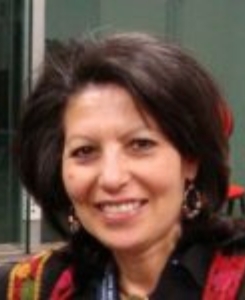
Mona Baker is Affiliate Professor at the Centre for Sustainable Healthcare Education (SHE) at the University of Oslo, co-cordinator of the Genealogies of Knowledge Research Network, and Honorary Dean of the Graduate School of Translation and Interpreting, Beijing Foreign Studies University. She is a recipient of the 2015 Kuwait Foundation for the Advancement of Sciences Award in the field of Arts and Languages, Studies in Foreign Languages and Literatures, and honoree of the 2011 Fifth Session of Abdullah Bin Abdulaziz International Award for Translation, for contributions to the field of translation. Baker is author of In Other Words: A Coursebook on Translation (third edition 2018) and Translation and Conflict: A Narrative Account (2006; Classics edition 2018), co-author (with Eivind Engebretsen) of Rethinking Evidence in the Time of Pandemics: Scientific vs Narrative Rationality and Medical Knowledge Practices, and editor of Translating Dissent: Voices from and with the Egyptian Revolution (2016; winner of the Inttranews Linguists of the Year award for 2015), Routledge Encyclopedia of Translation Studies (third edition 2020, co-edited with Gabriela Saldanha), Critical Concepts: Translation Studies (4 volumes, Routledge, 2009), and Critical Readings in Translation Studies (Routledge, 2010). She is also a founding co-editor of Encounters in Translation. Her articles have appeared in a wide range of international journals, including Humanities and Social Sciences Communications, Social Movement Studies, Critical Studies on Terrorism, Social Semiotics, The Translator and Target. She posts on translation, citizen media and Palestine on her personal website and tweets at @MonaBaker11.
Jan Buts (Dr.)
Dr. Jan Buts
Tutor, Translation Research Summer School (TRSS)
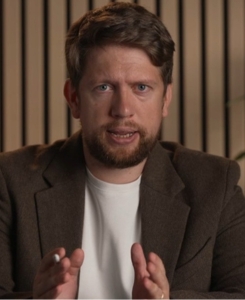
Dr. Jan Buts is an Associate Professor in the Sustainable Health Unit at the University of Oslo. His interdisciplinary work is situated at the intersection of translation theory, medical humanities, conceptual history, and corpus linguistics. He is actively involved in developing the Sustainability and Health Corpus and teaches courses on sustainable health, narrative medicine, and public health politics. Dr. Buts holds a PhD in Translation and Intercultural Studies from the University of Manchester and has previously held academic positions in Ireland and Turkey.
Hong Kong Baptist University (HKBU) Kowloon Tong Campus, comprising three campuses namely Baptist University Road Campus (BURC), Ho Sin Hang Campus (HSHC), and Shaw Campus (SHAW), is located right in the middle of the vibrant city and is well-served by public transport.
TRSS 2026 will be held on the Shaw Campus (SHAW).
Hotel Recommendations**
The following hotels are within a 30-minute travel time from the HKBU campus:
- Royal Plaza Hotel
(Address: 193 Prince Edward Road West, Kowloon, Hong Kong. By MTR from Mong Kok East MTR station) - Metropark Hotel Kowloon
(Address: 75 Waterloo Road, Kowloon, Hong Kong. By Bus#7 from bus stop YT320 to bus stop KC620) - The CityView
(Address: 23 Waterloo Road, Kowloon, Hong Kong. By either Bus#7 from bus stop KC334 to bus stop KC620, or MTR from Yau Ma Tei MTR station)
Room rates of these hotels can be found on the hotel websites or most hotel booking platforms.
**This list of nearby hotels is provided for your convenience. The University does not endorse any specific hotel and is not a party to any agreements made between guests and the hotel or booking platform. All booking and payment arrangements must be made directly.
Getting to Shaw Campus (SHAW), HKBU by Mass Transit Railway (MTR)
The nearest MTR station is Kowloon Tong Station. From there you can walk or take the minibus to our Kowloon Tong Campuses.
- Walking (Takes roughly 10–15 mins):
Exit from Exit A2
Walk past Suffolk Road, turn into Waterloo Road (Northbound), turn right into Junction Road, and turn right again into Renfrew Road. SHAW Campus is on your left-hand side (opposite to the People’s Liberation Army Kowloon East Barracks)
- Taking the minibus:
Exit from Exit B or D to get to the green minibus station of the Kowloon Tong Public Transport Interchange. Take route no. 25M or 25MS.
 Link to HKBU Campus Map (PDF)
Get Directions to HKBU from Kowloon Tong MTR Station (PDF)